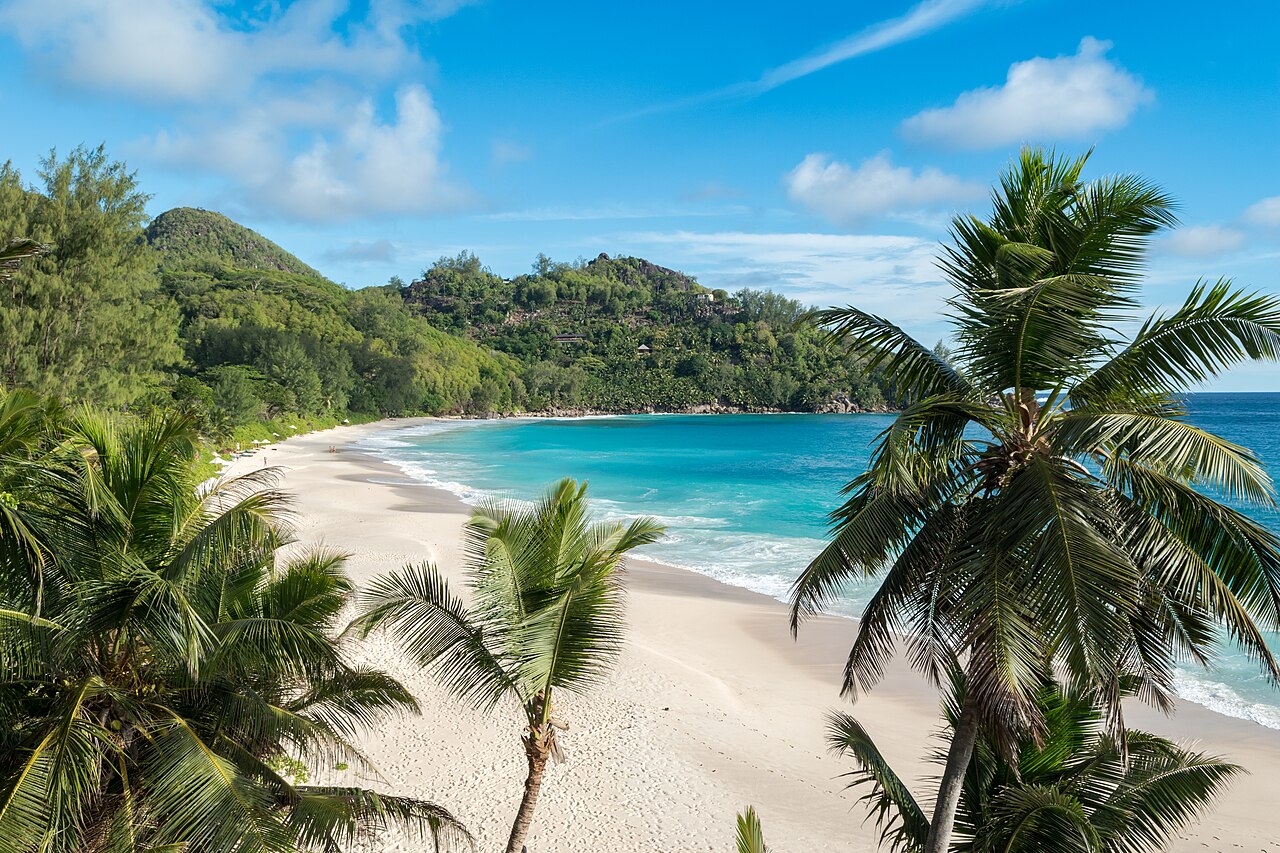
There is no bad month. There is a wrong coast
The weather, month by month
Seychelles sits four degrees south of the equator, so the temperature barely moves all year. What moves is the wind, and it decides which beach you can swim at.
The temperature never moves. The wind does.
Seychelles is four degrees south of the equator, which means the temperature sits between about 24 and 32 degrees every month of the year and the length of the day barely changes. Sunrise is around six and sunset is around six, in January and in July alike. There is no cold season, no dry-and-brown season, and nothing that would stop you swimming.
What changes is the wind, and it changes twice a year. Everything anybody needs to know about the Seychelles climate follows from that, including which beach you can swim at in the month you are coming.
December to March: the north-west monsoon
The warmest and wettest part of the year, and the greenest the islands ever look. The rain comes in short heavy afternoon bursts rather than as a grey day, and December is the wettest month of the twelve. The wind comes from the north west, which means the sea piles up on the north and west coasts and lies flat on the south and east.
So this is the season for Anse Royale, Anse Forbans and the eastern side of Mahé, for the southern beaches, and for the sheltered eastern anses on La Digue. It is the wrong season to book a hotel at Beau Vallon expecting glass.
May to September: the south-east trades
Drier, breezier and a little cooler at night. The trade winds blow steadily from the south east for four or five months and they are strong enough to be a constant presence rather than a breeze. They pile the sea and the sargassum weed onto the south-eastern shores and leave the north and west flat calm.
This is the season for Beau Vallon, Glacis and Port Launay on Mahé, for Anse Lazio and Côte d'Or on Praslin, and for Anse Sévère and the north-western side of La Digue. Anse Intendance in July is a photograph rather than a swim.
April and October: the two calm months
Between the monsoons the wind loses its direction for a few weeks. In April and in October there is no prevailing side, the sea goes quiet all the way round each island at once, and the visibility under water is the best of the year. If you are choosing the month purely on the sea, choose one of these two.
They are also the two months with the least rain-and-wind compromise, and October is the one that lines up with Dussehra and Diwali, which is why it turns up on this site more than any other month.
A car, delivered
Ten cars, no deposit, handed over at the airport, the jetty or your hotel. The small ones do the whole of Mahé and the Jimny does the hill roads.
See the fleetThe rain, which is not what Indian readers expect
The word monsoon means something different here. In India it is a season of rain. In Seychelles it is the name of a wind, and rain is a separate matter. Even in December, the wettest month, the pattern is a heavy shower in the afternoon that empties itself in twenty minutes and leaves the evening clear.
Nobody here cancels a day for rain. The boat trips run, the roads drain, and the only thing genuinely lost to weather is the occasional crossing to an outer island, which is cancelled for sea state and not for rain.
Sea temperature and what you need to wear in it
The water sits in the high twenties all year and never gets cold enough to need a wetsuit. Divers here wear a shorty for abrasion rather than for warmth. Children stay in until they are told to come out, in January and in July equally.
What the water does change is clarity. Visibility is at its best in April and October, good through the calm months on the sheltered coast, and worst on any windward shore during the trades, where the sand stays stirred up.
Cyclones, and why they miss
The south-west Indian Ocean has a real cyclone season, from about November to April, and it produces serious storms. They form and travel well to the south of here, over the latitudes of Madagascar, Mauritius and Réunion. Seychelles sits too close to the equator for cyclones to form over it, and direct hits are rare enough to be historical events rather than a planning consideration.
That is one of the more meaningful differences between Seychelles and the islands it is usually compared to, and it is the reason the season here is described by wind direction rather than by risk.
How to use all of this in one sentence
Pick your month, look up which coasts are calm in it, and then book a hotel on one of those coasts. That is the whole method, and it will do more for the quality of the holiday than the star rating of the hotel will.
If your dates are fixed and the wrong coast is where you have already booked, hire a car. Both coasts of Mahé are twenty minutes apart and the calm one is always there.
The weather, month by month, in six frames.
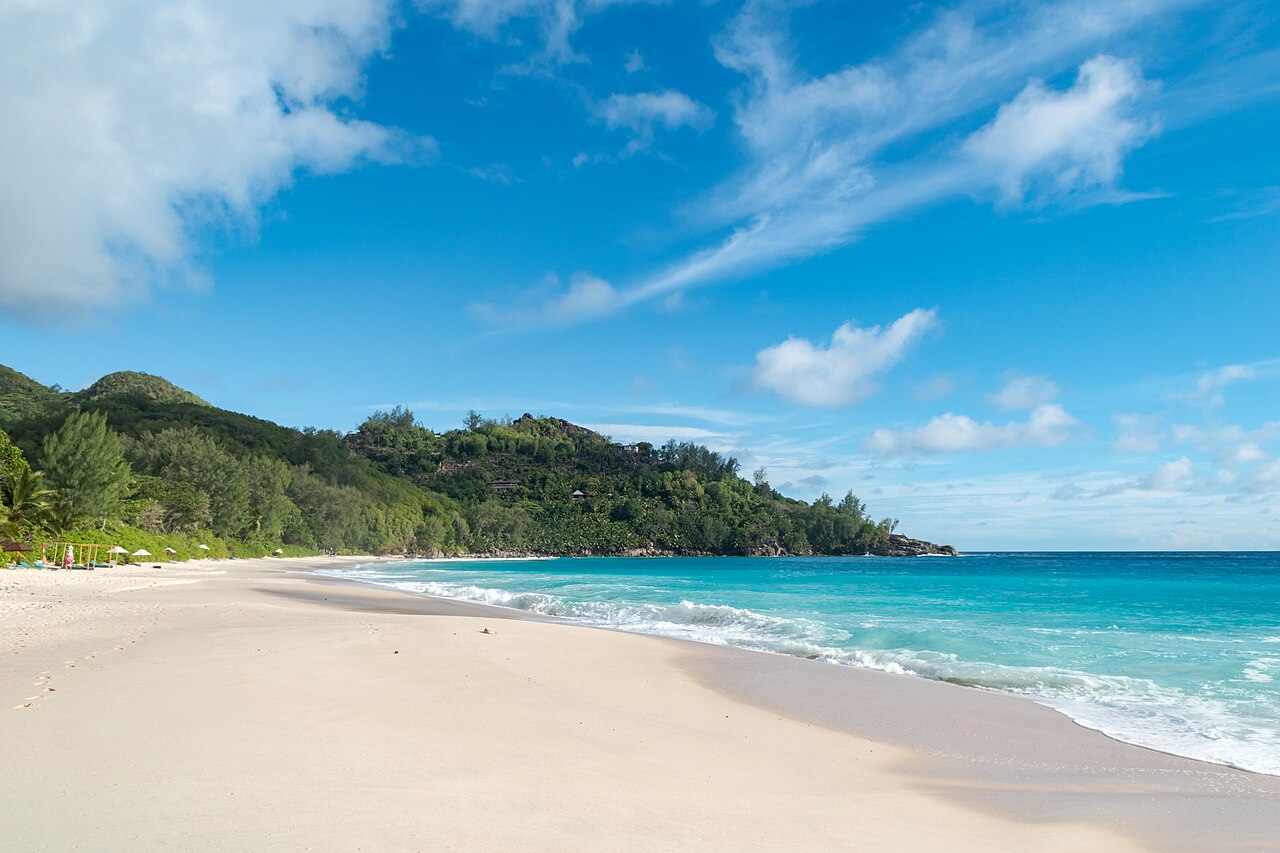
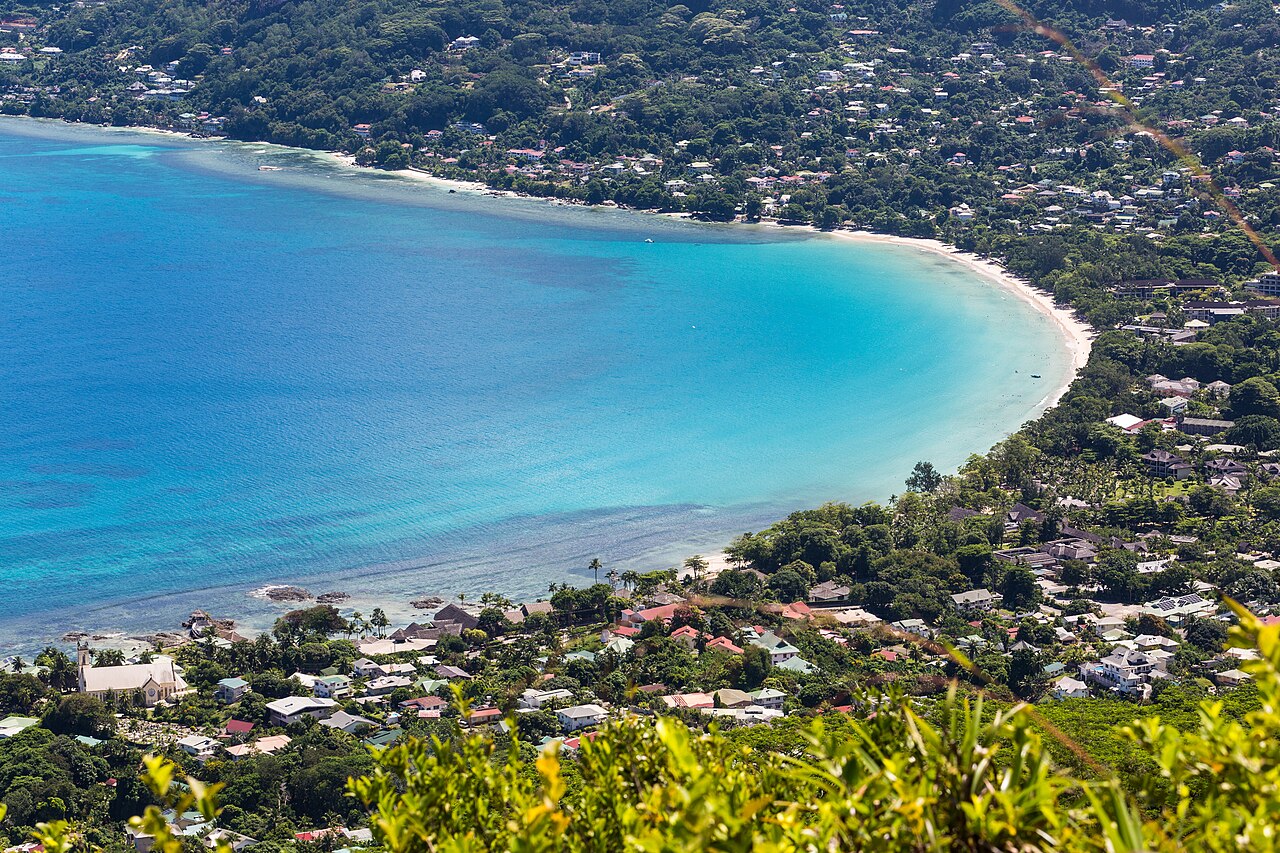
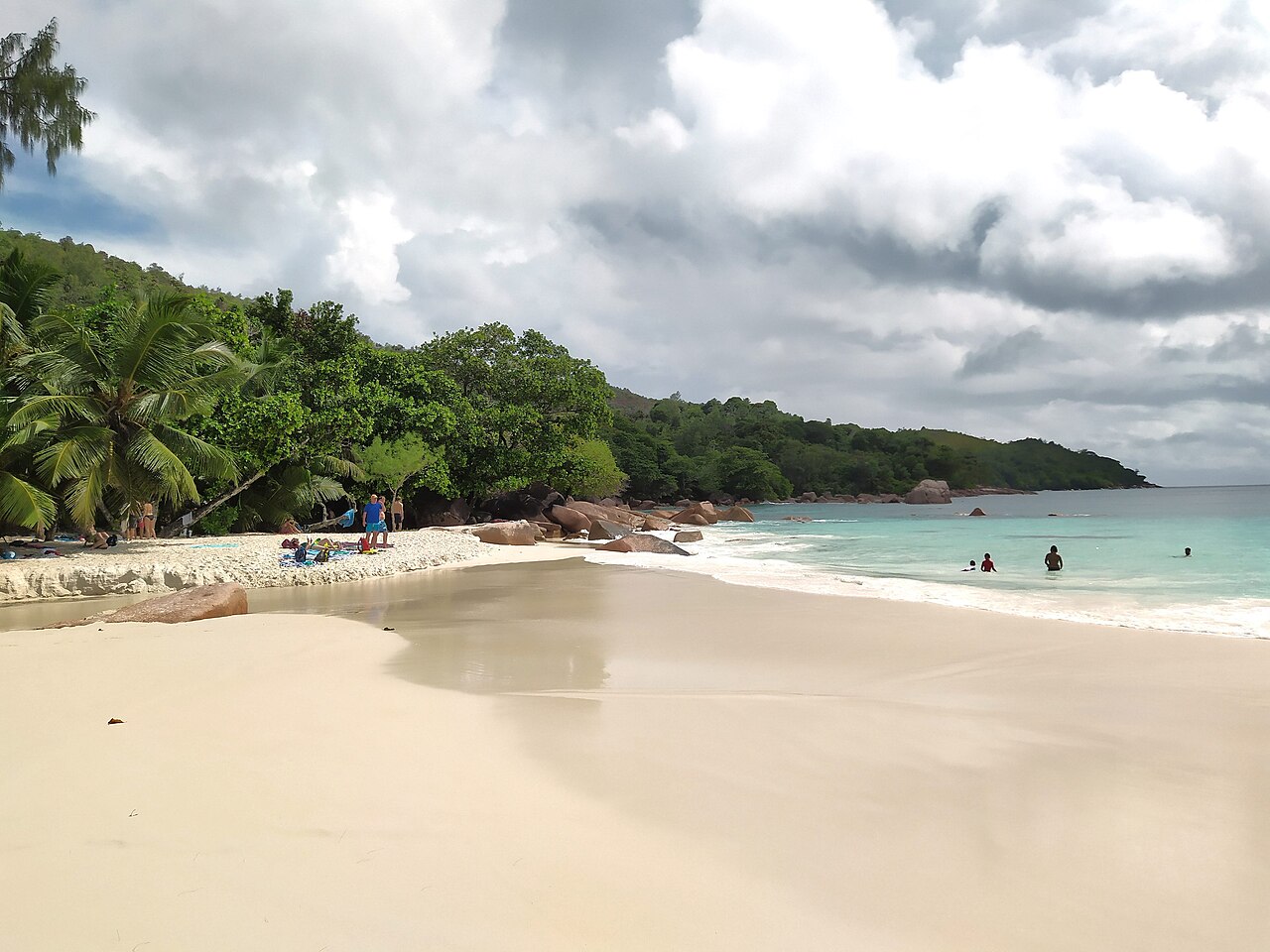

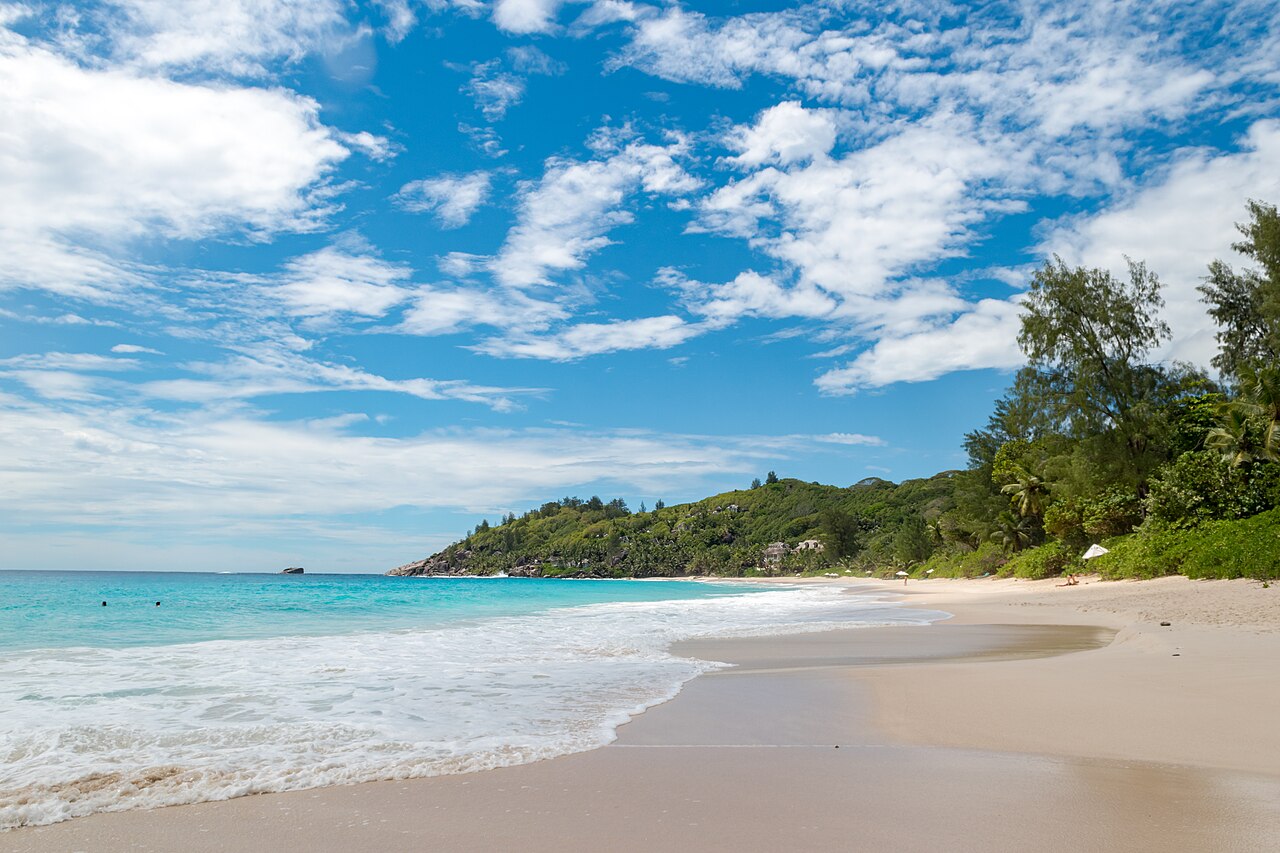
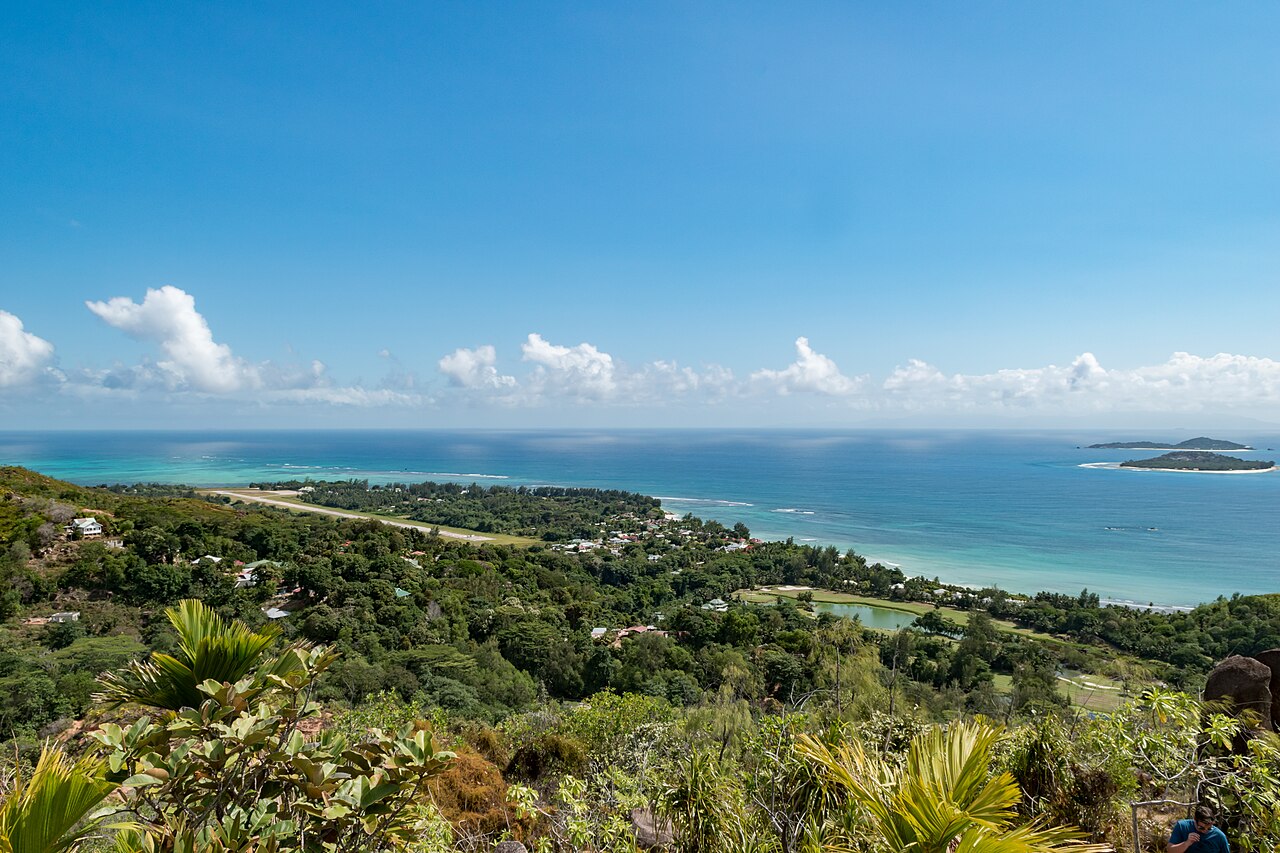
Photographs, under Creative Commons: dronepicr, CC BY 2.0 prilfish, CC BY 2.0 Radosław Botev, CC BY 3.0 pl Hansueli Krapf, CC BY-SA 3.0 dronepicr, CC BY 2.0 dronepicr, CC BY 2.0
What people ask.
What is the weather like in Seychelles all year?
Between about 24 and 32 degrees every month, with sunrise around six and sunset around six all year. There is no cold season. What changes is the wind: north-west from December to March, south-east from May to September.
Which is the wettest month?
December, followed by January. The rain arrives as heavy afternoon showers that clear within the hour rather than as continuous grey days, and it is also when the islands are at their greenest.
Which is the driest month?
July and August, in the middle of the south-east trades. Those are also the windiest months, which is why the coast you stay on matters most in them.
Is there a cyclone season in Seychelles?
Not over the islands themselves. The cyclone belt of this ocean lies well to the south, and Seychelles is too close to the equator for cyclones to form over it. Direct hits are rare enough to be historical events.
What is the sea temperature?
High twenties, all year. Nobody wears a wetsuit for warmth. What varies is not temperature but clarity, and that follows the wind.
Does it matter which coast we stay on?
More than anything else about the hotel. December to March the south and east coasts are the calm ones. May to September the north and west are. April and October every coast is calm.
Tell us the month and we will tell you the coast
Send the fortnight you can travel in. Meera will write back with the coast that will be calm, the beaches worth the drive and the two or three places to sleep on it.