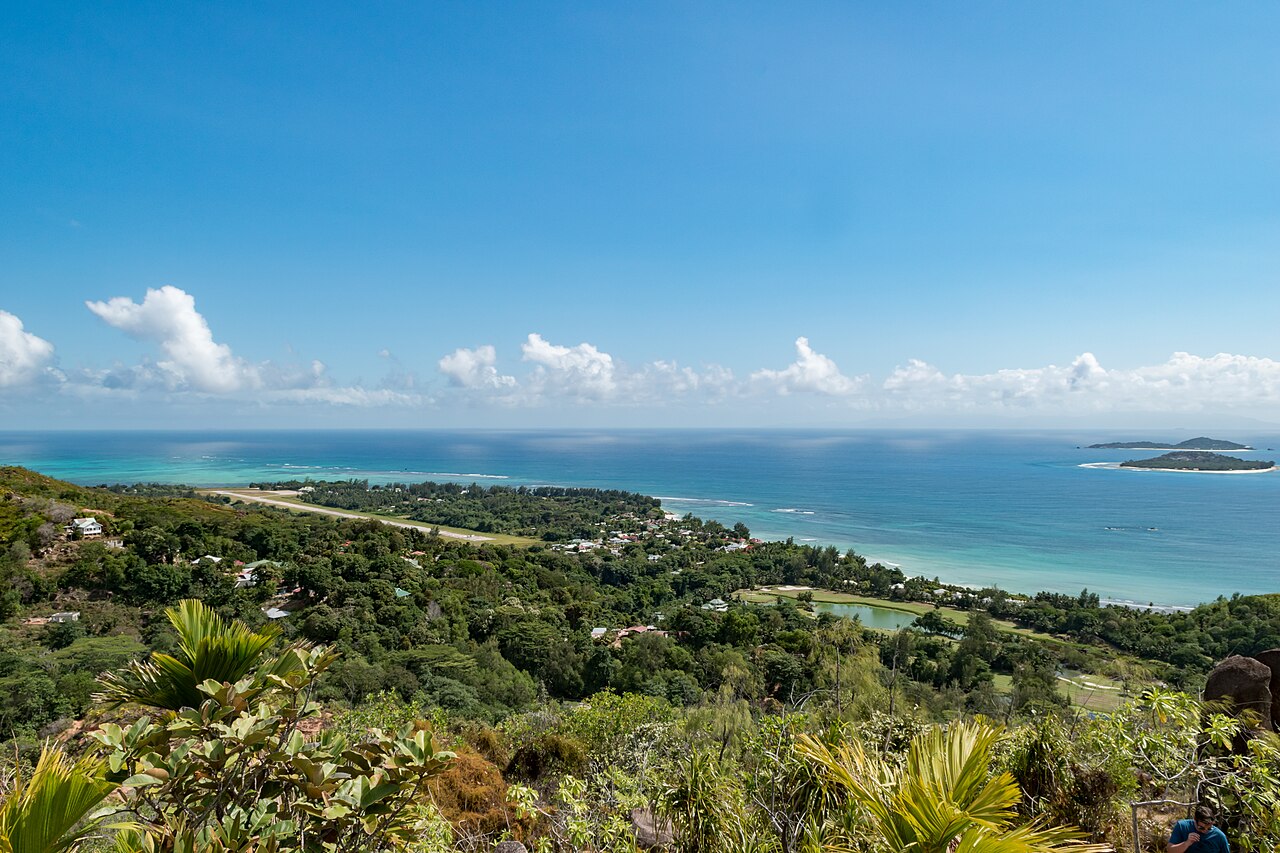
There is no bad month. There is a wrong coast
The best time to visit Seychelles
Four degrees south of the equator the temperature does not change. What changes is the wind, and it decides which half of each island you can swim at.
One rule decides the whole trip.
Every operator selling Seychelles will tell you it is good all year. That is true and it is also the least useful true sentence in travel. It is good all year in the sense that the temperature never moves and the sun is always there. It is not good all year on any particular beach, and if you have booked a hotel on the wrong coast for the month you are in, you will spend the fortnight looking at seaweed.
The rule is this. From December to March the north-west monsoon blows, and the south and east coasts are the calm ones. From May to September the south-east trade winds blow, and the north and west coasts are the calm ones. April and October sit between the two and every coast behaves. That is the entire secret, and almost nobody selling you a room will print it, because it means half their rooms are wrong for half the year.
Month by month.
Twelve months, what the wind is doing, and which coasts are calm in each. Read your month, then read the coast, then choose the hotel.
| Month | The wind | Calm coasts | The Indian window |
|---|---|---|---|
| January | North-west monsoon, at its wettest | South and east | New Year, and the shortest school break |
| February | North-west monsoon, easing | South and east | The quiet weeks after the holidays |
| March | North-west monsoon, ending | South and east | Holi, and the end of the school year |
| April | Between the two monsoons, almost no wind | Every coast | The board-exam gap, and one of the two best windows |
| May | South-east trades arriving | North and west | The long summer break begins |
| June | South-east trades set in | North and west | The summer break, and the cheapest good weeks of the year |
| July | South-east trades at their strongest | North and west | The summer break, ending |
| August | South-east trades, still strong | North and west | Independence Day and the mid-August weekends |
| September | South-east trades easing | North and west | A quiet month here and there |
| October | Between the two monsoons, almost no wind | Every coast | Dussehra, and the run-up to Diwali |
| November | North-west monsoon arriving | South and east | Diwali, and the calmest first half of any month |
| December | North-west monsoon, the greenest month | South and east | Christmas, New Year, and the peak of the year |
No rainfall figures and no month-by-month temperatures, on purpose. We have not measured those and printing somebody else's would be a citation dressed as a fact. The temperature here sits between about 24 and 32 degrees the whole year round and barely moves, which is the only thing about it worth knowing.
The two monsoons, in plain words
A monsoon here is a wind, not a wall of rain. The north-west monsoon runs roughly December to March and it brings the warmest, wettest, greenest weather of the year: short heavy showers that arrive in the afternoon and are gone within the hour, and a sea that is glassy on the south and east coasts because the wind is pushing from the other side of the island.
The south-east trades run roughly May to September and they are the opposite. Drier air, more wind, cooler nights, and a sea that piles up on the south-eastern shores and carries seaweed onto them. Behind the islands, on the north and west, the water goes flat. Beau Vallon in July is a swimming pool. Anse Intendance in the same week is a shore break that will knock a grown adult down.
April and October are the two good months
Between the two monsoons the wind gives up for a few weeks. In April and again in October there is no prevailing direction, the sea goes quiet everywhere, and the visibility under water is the best it gets all year. If you are choosing purely on the sea and nothing else, these are the two months.
They are also, conveniently, the two months India can most easily travel in. April falls in the gap after the board exams and October runs into Dussehra and Diwali. Neither of those is a coincidence we arranged, but both are the reason this site keeps pointing at them.
What the school holidays actually get you
The long Indian summer break, May and June, lands exactly as the trades arrive. That is not a bad window, it is a window with a condition attached: stay on the north and west. Beau Vallon on Mahé, Anse Lazio and Côte d'Or on Praslin, Anse Sévère on La Digue. Those coasts are calm through the whole trade-wind season, and the rates in June are the lowest of the year.
Christmas and New Year is the other window most families can use, and it is the expensive one. December and January are the peak here as well as at home, the islands are full, and the good restaurants stop taking walk-ins. It is also the greenest the country ever looks, and the south and east coasts, which are wrong for half the year, are exactly right for it.
The seaweed question, honestly
Sargassum weed washes onto the windward coasts in the trade-wind months and the hotels rake it off their own frontage in the morning. On a public beach nobody rakes it. It is not dirty, it does not smell for the first day or two, and it does not follow you around the island: drive twenty minutes to the other coast and there is none.
Every operator knows this and almost none of them say it, which is why people arrive surprised. Knowing about it in advance turns it from a ruined holiday into a twenty-minute drive.
Cyclones, which are not the risk you think
Seychelles sits close enough to the equator that tropical cyclones almost never form over it. The cyclone belt of the south-west Indian Ocean lies further south, over Madagascar, Mauritius and Réunion. That is the single biggest weather difference between Seychelles and the islands it gets compared to.
What you do get, in the north-west monsoon, is heavy afternoon rain and the occasional day of it. Boats to the outer islands are cancelled for sea state rather than for storms, and the inter-island ferry runs in almost anything.
What we would book, and when
If the dates are open, October. If the dates are open and there is a ceremony in the trip, still October, because the sea holds and the light in the evenings is the best of the year. If the dates are the summer break, June on the north-west coast, and take the money the low season saves you and put it into the boat days.
If the dates are Christmas, book the flight the day you decide. It is the one week of the year when the islands genuinely run out of rooms, and the fare from India climbs faster than the room rate does.
One week, two coasts.
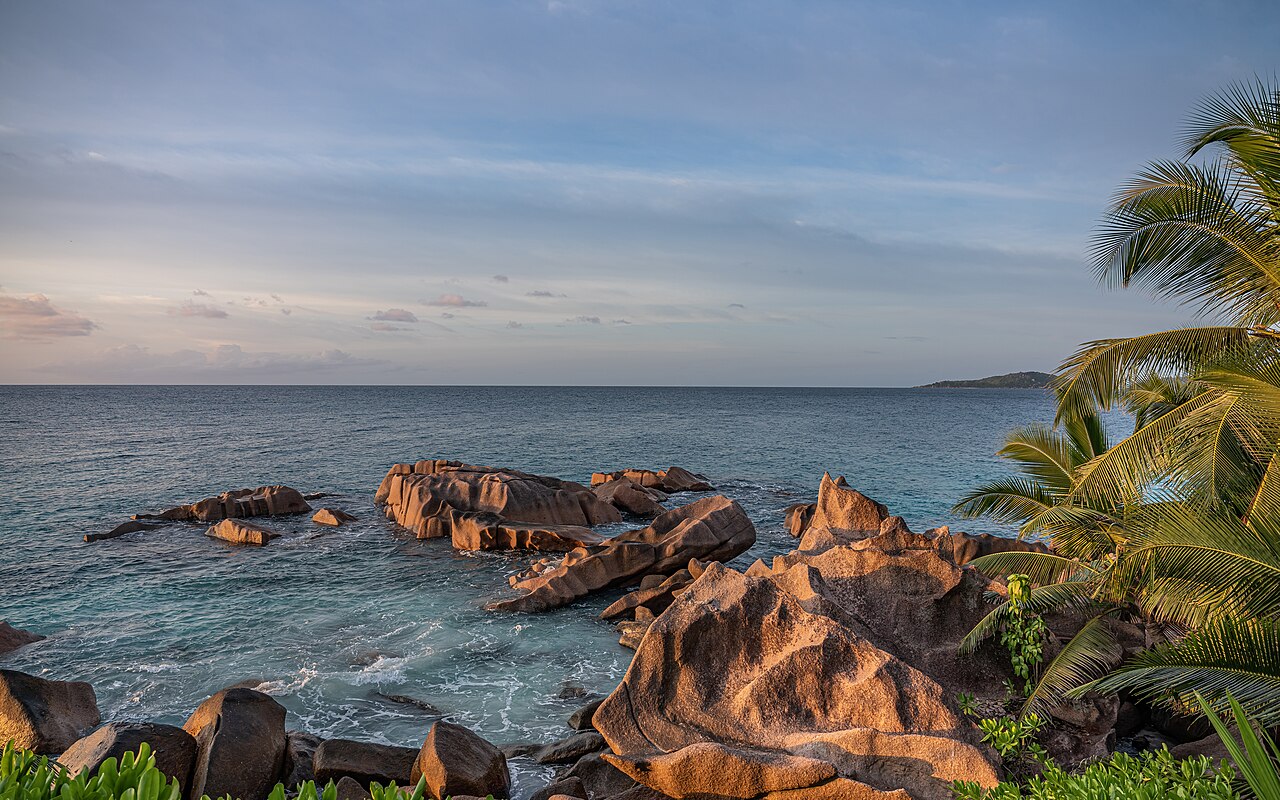
The same seven days in July, photographed on two coasts of the same island.
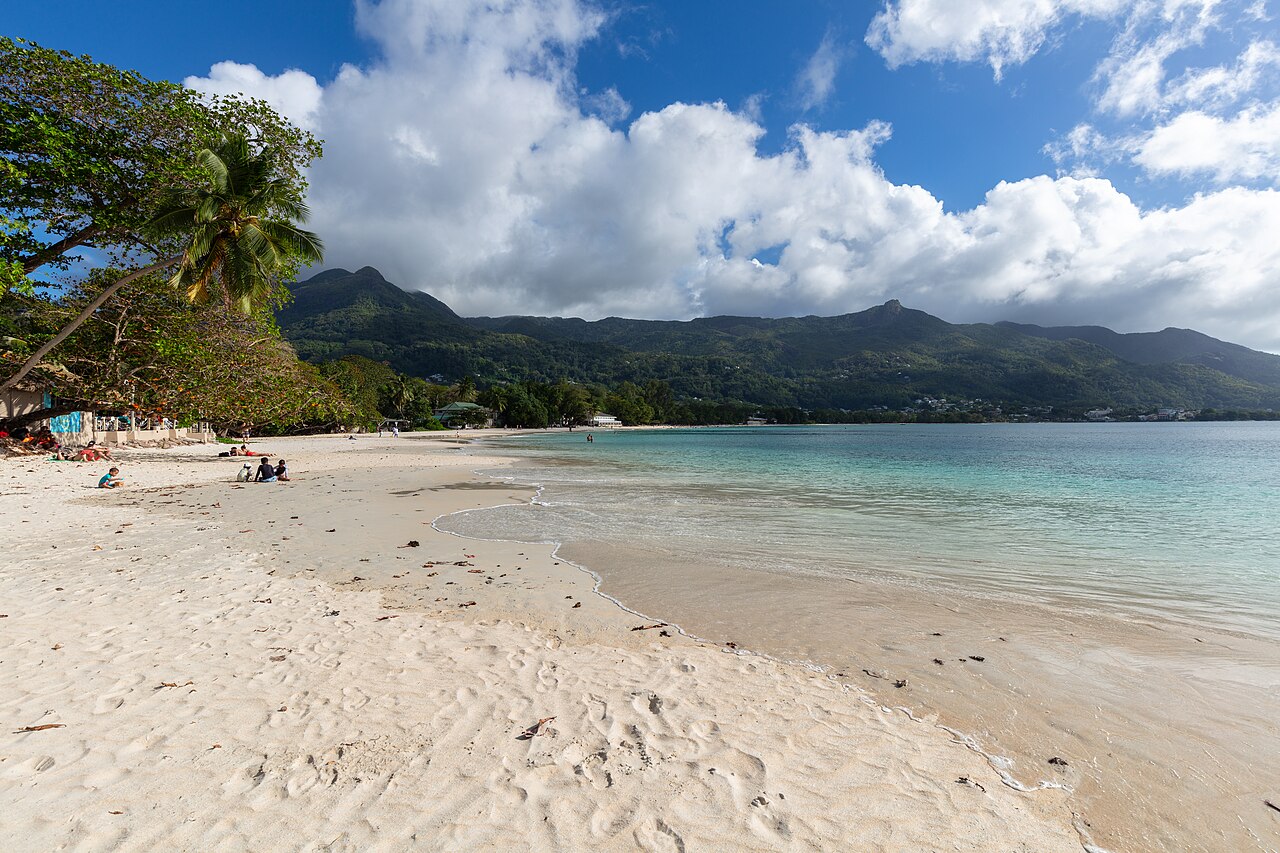
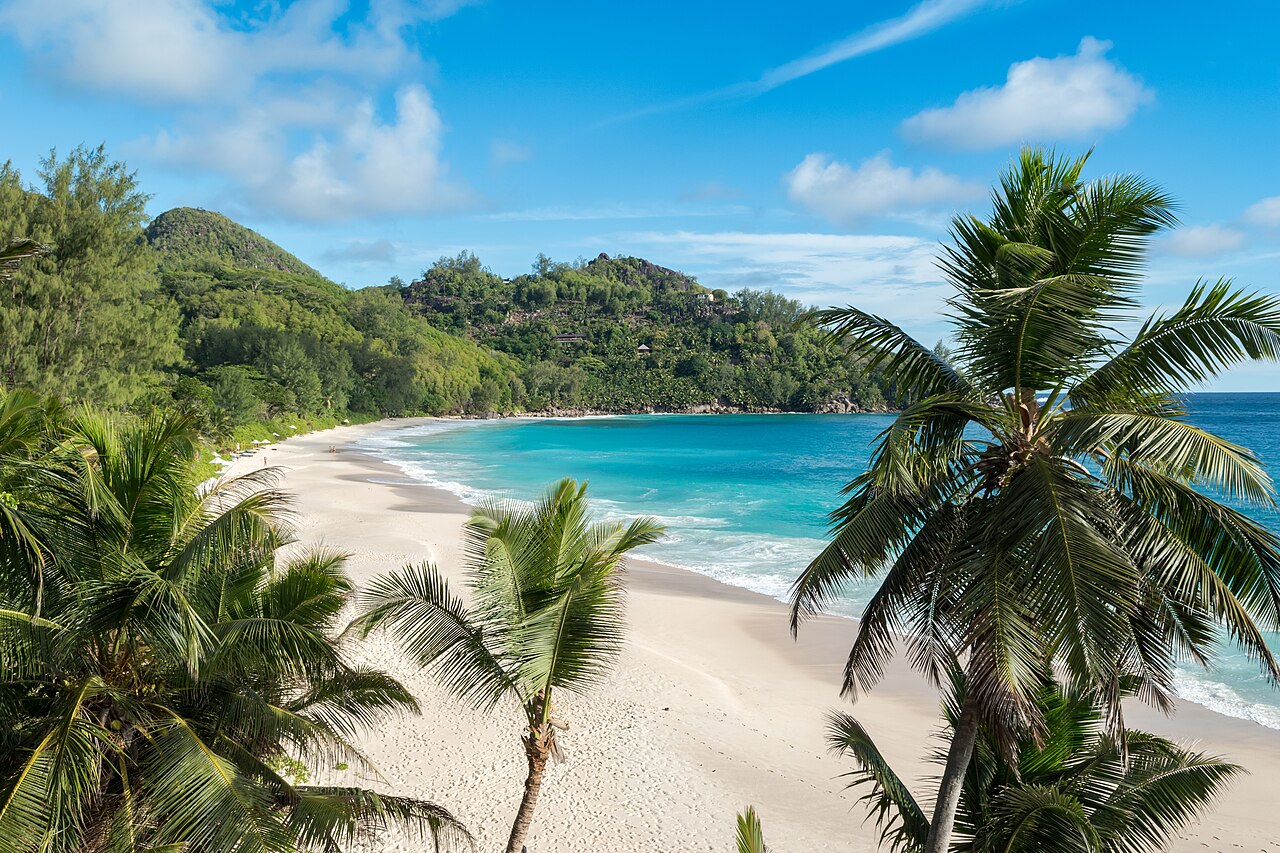
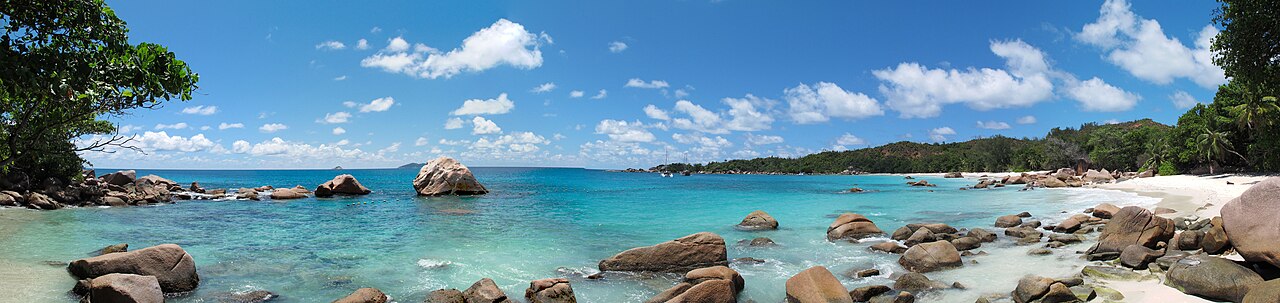


Photographs, under Creative Commons: Diego Delso, CC BY-SA 4.0 dronepicr, CC BY 2.0 Didi0032, CC BY-SA 3.0 Hansueli Krapf, CC BY-SA 3.0 Hansueli Krapf, CC BY-SA 3.0 A.Savin, FAL
What people ask.
What is the actual best month to visit Seychelles?
April or October. Both sit between the two monsoons, the wind drops away, every coast is calm at once and the underwater visibility is the best of the year. October has the additional advantage of falling in the Dussehra and Diwali window.
Is there a rainy season?
December to March is the wet half of the year, but it rains in short heavy bursts rather than for days. December is the wettest and also the greenest. July and August are the driest and the windiest. No month is a washout.
Which coast should we stay on in June and July?
North or west. On Mahé that means Beau Vallon, Glacis, Bel Ombre or Port Launay. On Praslin it means Anse Lazio and Côte d'Or. On La Digue it means Anse Sévère and the north-western side. The south and east coasts take the wind in those months.
Do cyclones hit Seychelles?
Almost never. The islands sit too close to the equator for tropical cyclones to form over them, and the cyclone belt of this ocean lies well to the south, over Madagascar, Mauritius and Réunion.
When is it cheapest?
May to September, and June most of all. Those are the trade-wind months, the north-west coasts stay calm through all of them, and the rates are the lowest of the year. It happens to coincide with the Indian summer break.
Is the sea warm all year?
Yes. The water sits in the high twenties year round and nobody here owns a wetsuit for warmth. What changes is not the temperature but the swell, and that is what the coast rule is about.
Give us your dates and we will tell you which coast
Send the fortnight you can travel in and Meera will write back with the coast, the islands worth the moves, and the two or three places that suit that particular sea.