Mini Moke hire in Seychelles
No roof, no doors, no air conditioning, and nothing else on these islands comes close. The modern re-issue of the car that has been the face of Seychelles since the seventies.
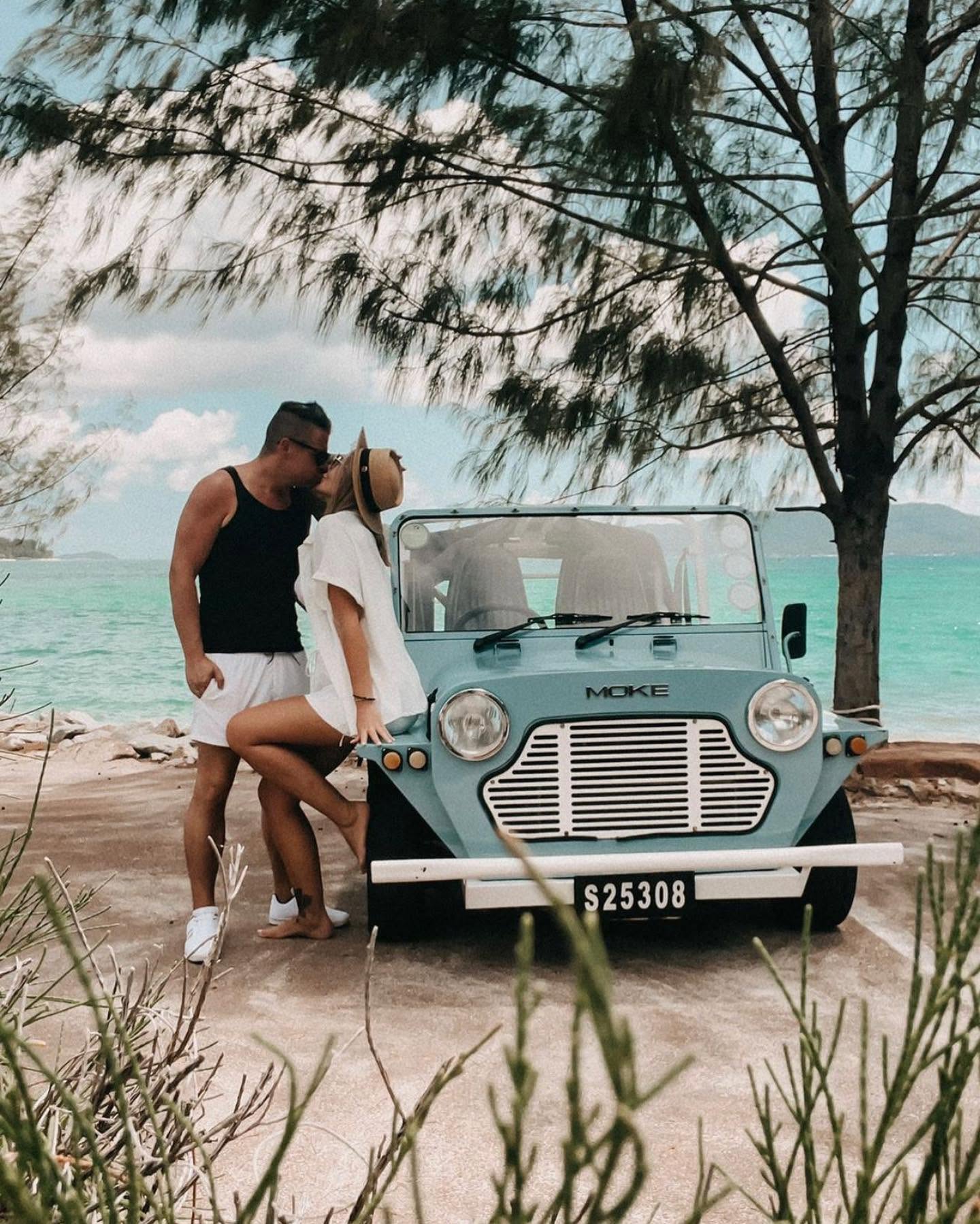
Two days is the right answer.
One calendar day costs €110 · ₹12,000. From two days it is €100 · ₹11,000 a day. Nothing is charged here and no deposit is held.
It is not transport. It is the day itself.
The Moke is not transport. It is the day itself. Four seats, a canvas top that goes up in about a minute when a squall comes over the ridge, and an interior that is simply the island you are driving through. Nobody rents this car to get somewhere faster.
Three things are true about it and all three are part of the point. It is the only manual gearbox in this fleet, so if nobody in your party drives a stick, take the Jimny instead and keep the photograph for someone else. It has no air conditioning, because the air is already all around you. The luggage space is roughly one beach bag, which is honest rather than apologetic.
It is a Mahé car. We do not send it across to Praslin, and La Digue restricts private cars anyway, so the Moke's whole world is the coast road, the Sans Souci pass and whichever bay you stop at because it looked right.
Not a catalogue picture.
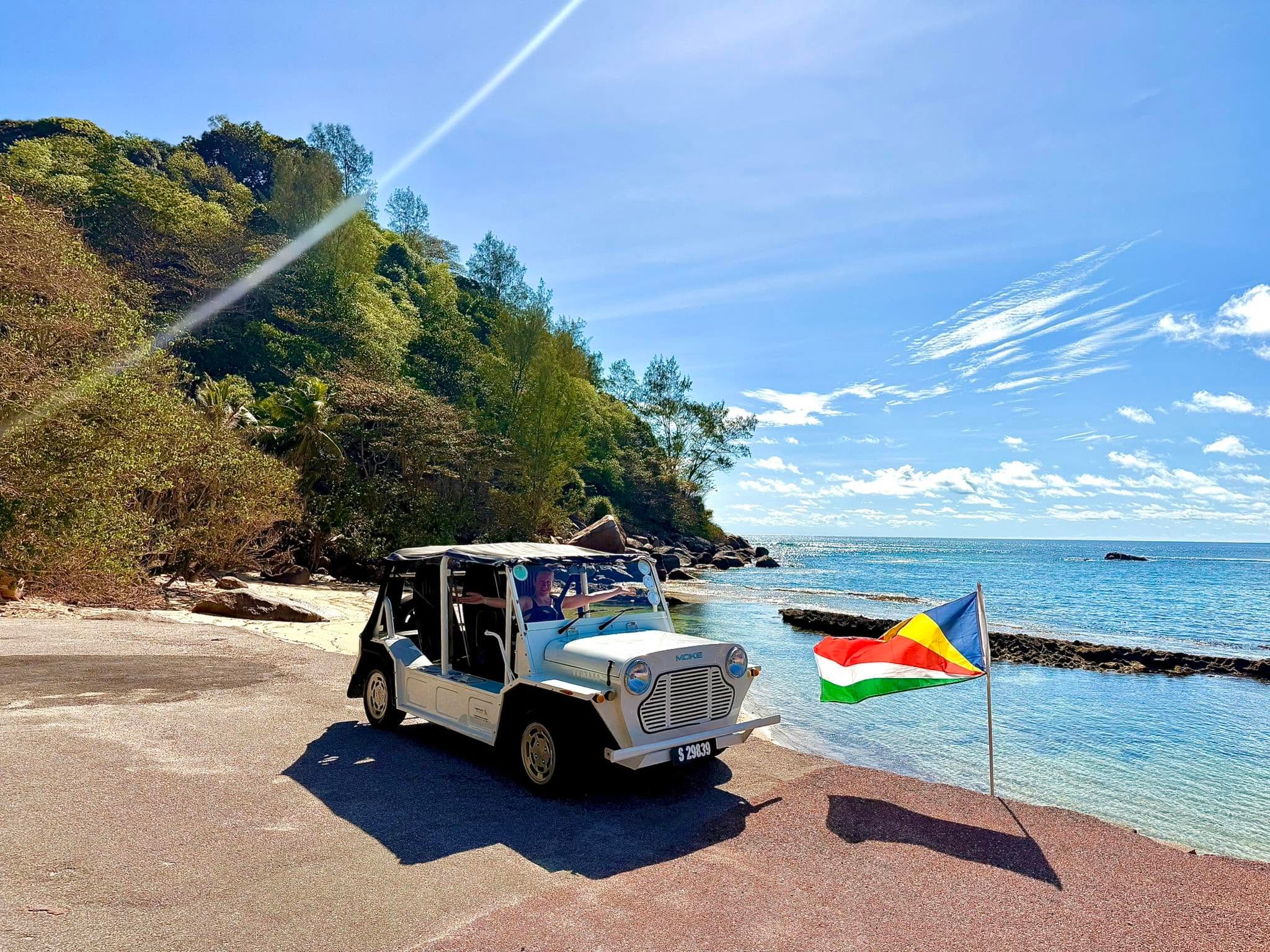
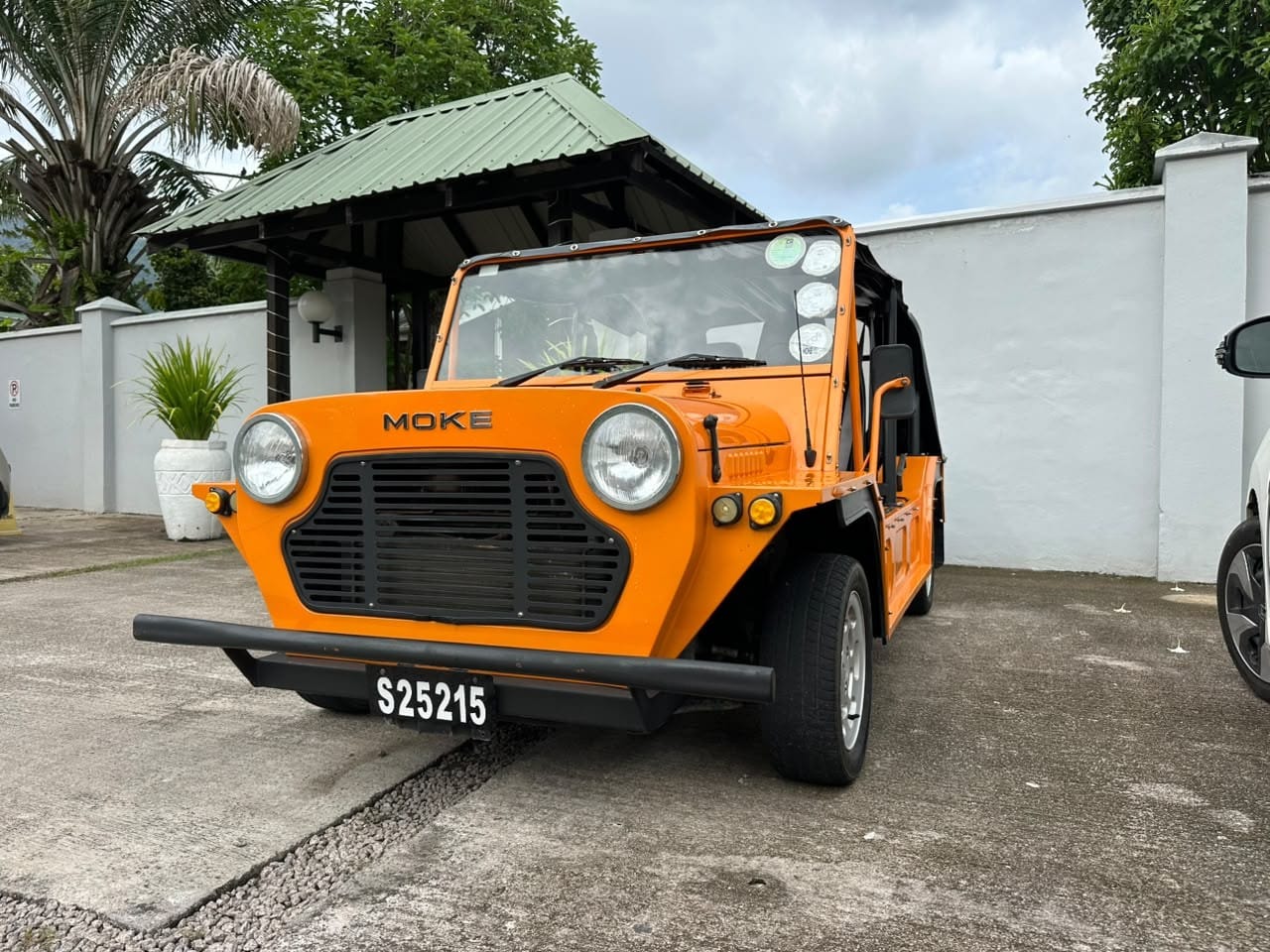
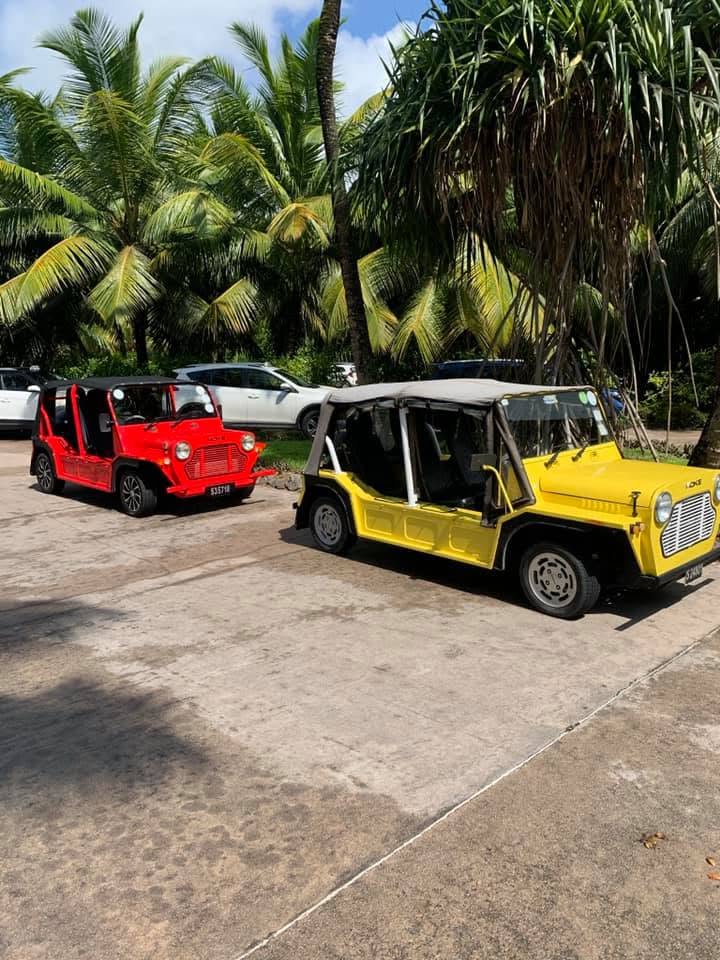
These are the actual cars we hand over, taken on the island.
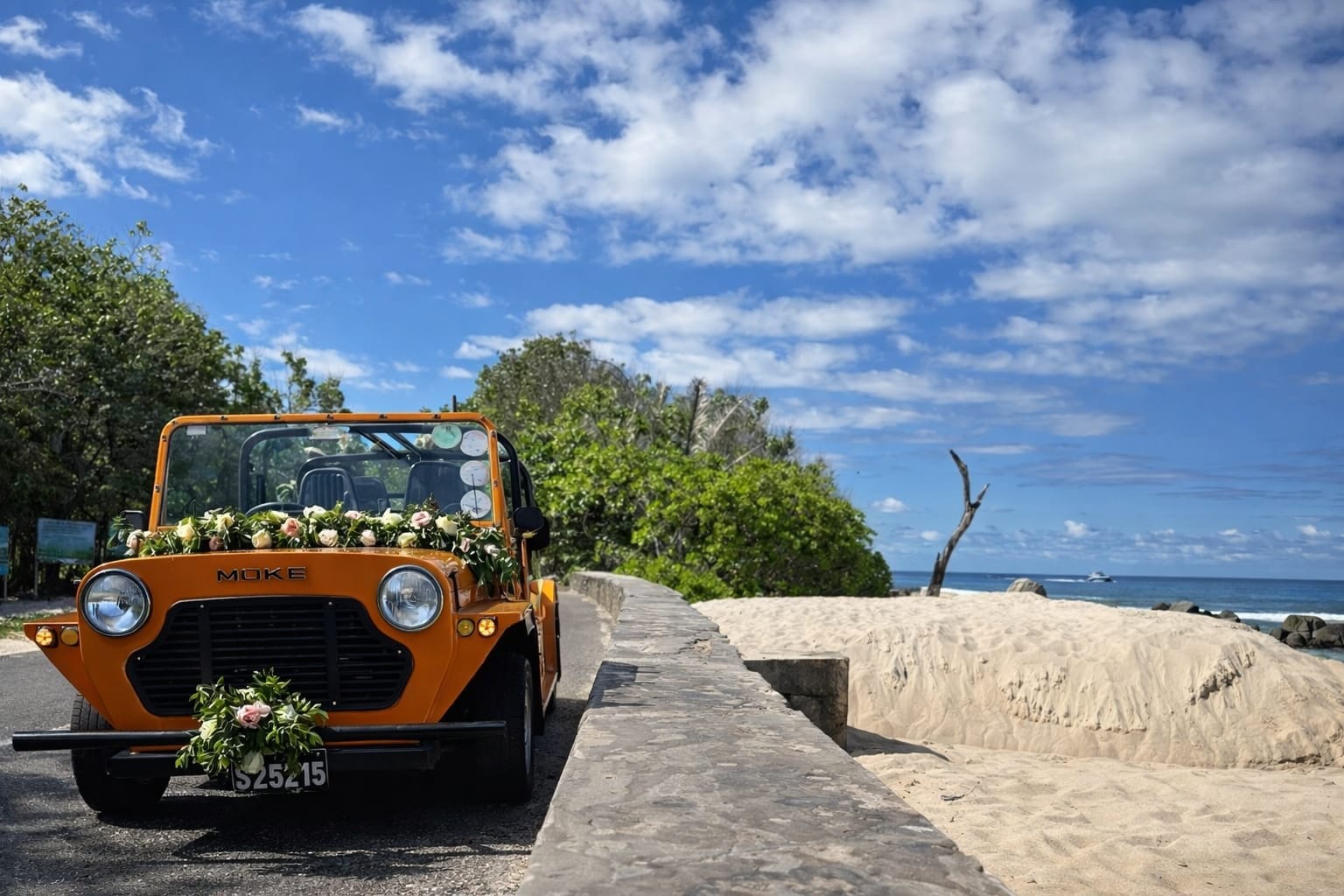
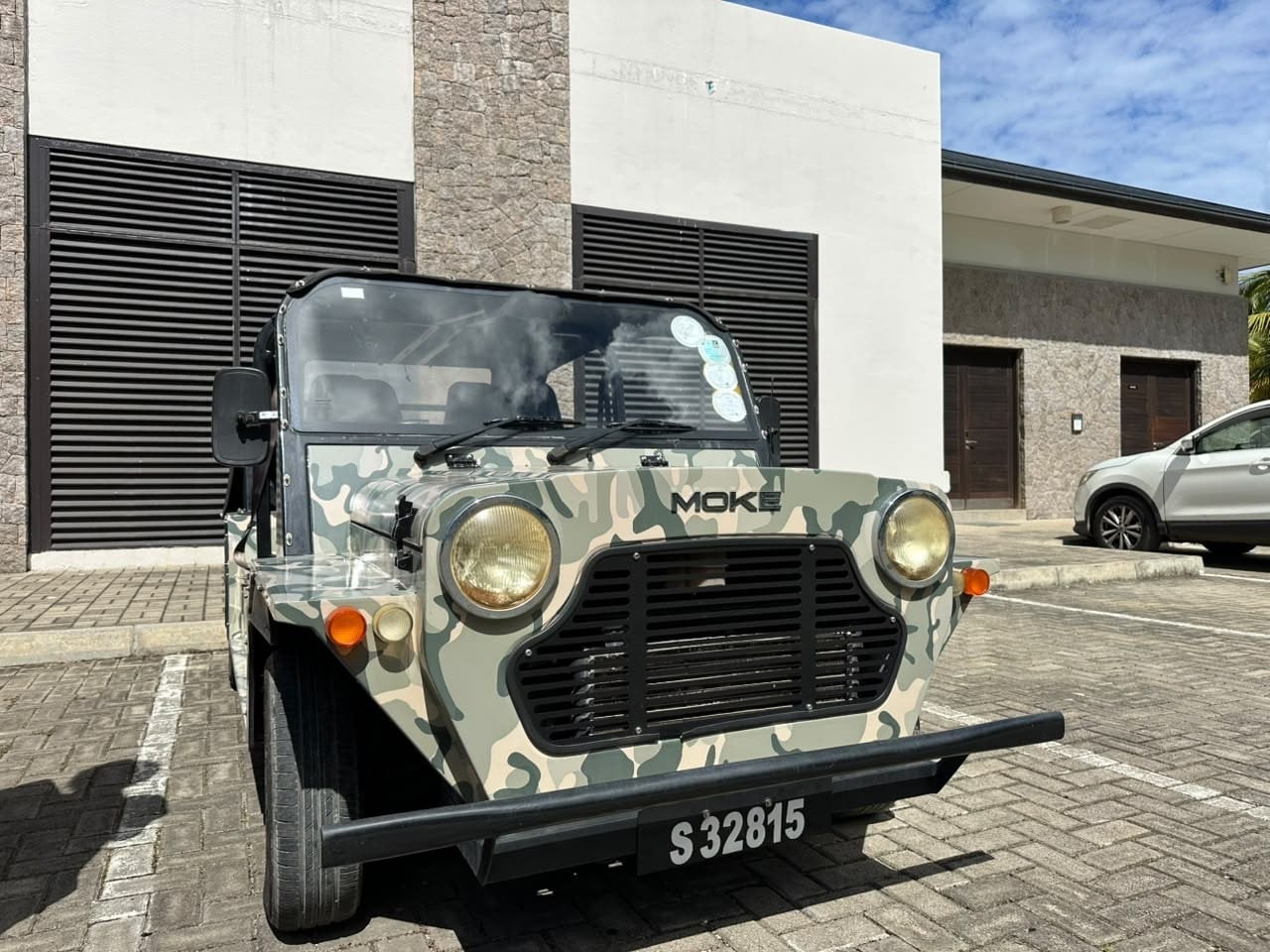
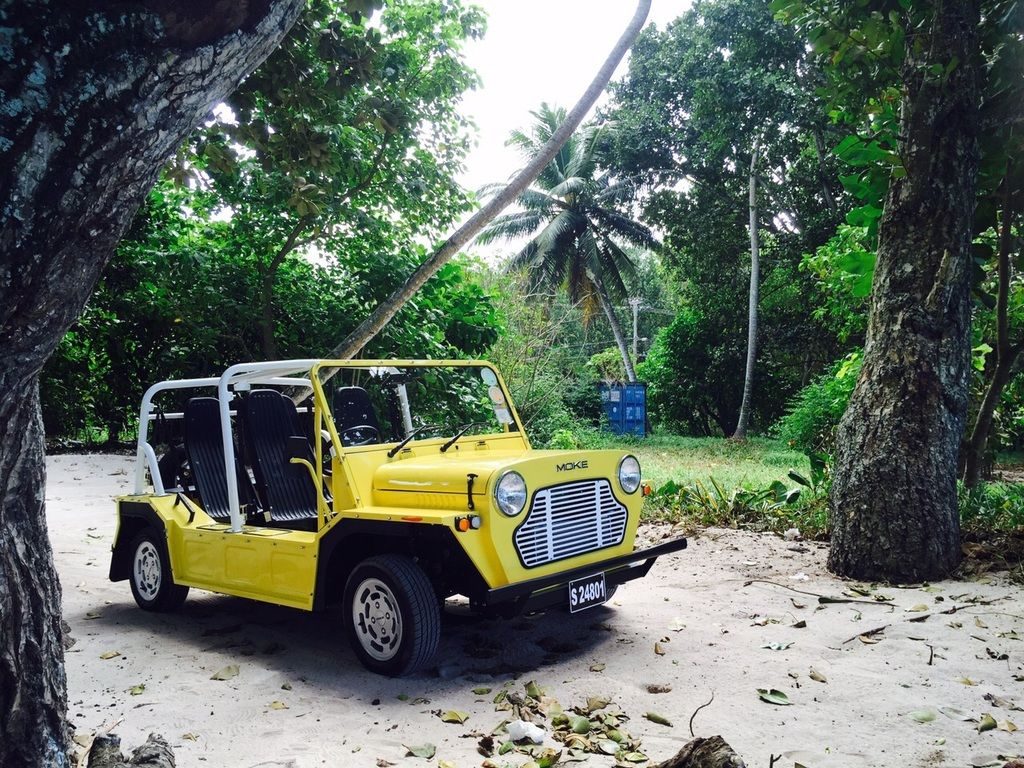
From 1964 to the one at your door.
The Moke did not arrive here as a rental novelty. It was the island's own car, and then it was on the stamps.
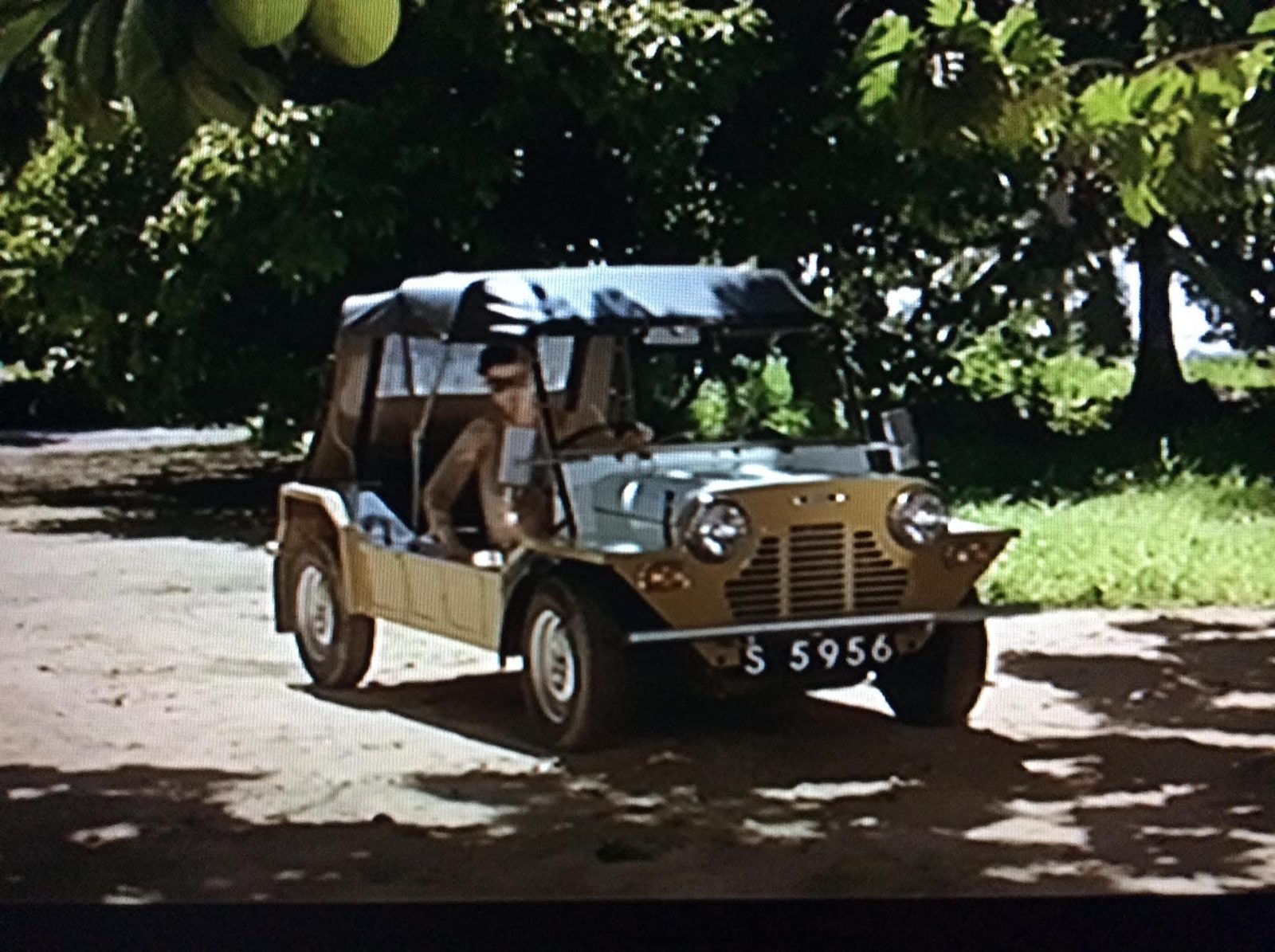
The seventies
A classic Moke under the takamaka, which is how an entire island generation remembers it. The Moke arrived in Seychelles in the seventies and then simply never left.
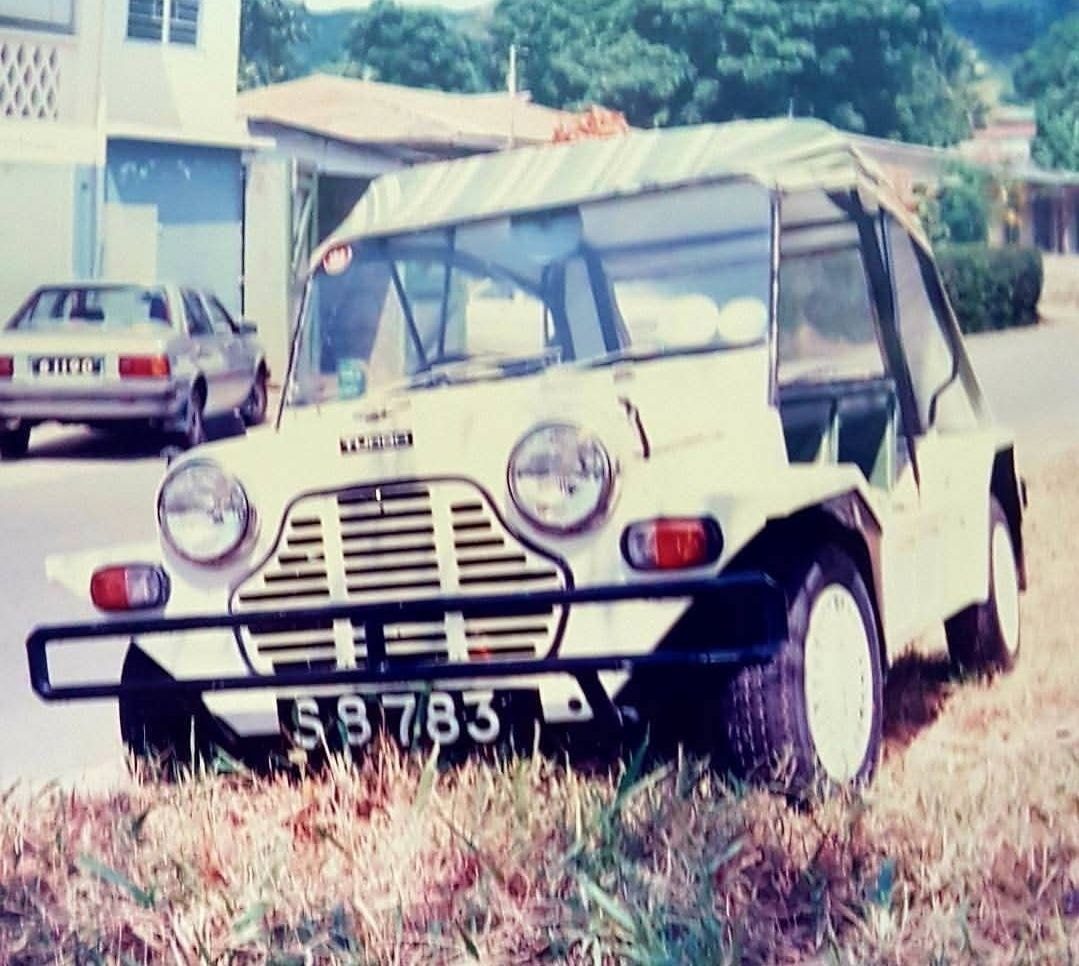
Everyone's car, not the tourist's
A canvas-topped Moke on a street in Mahé. This was not a holiday car. It went to the market, to work and to the beach, with the sea alongside the whole way.
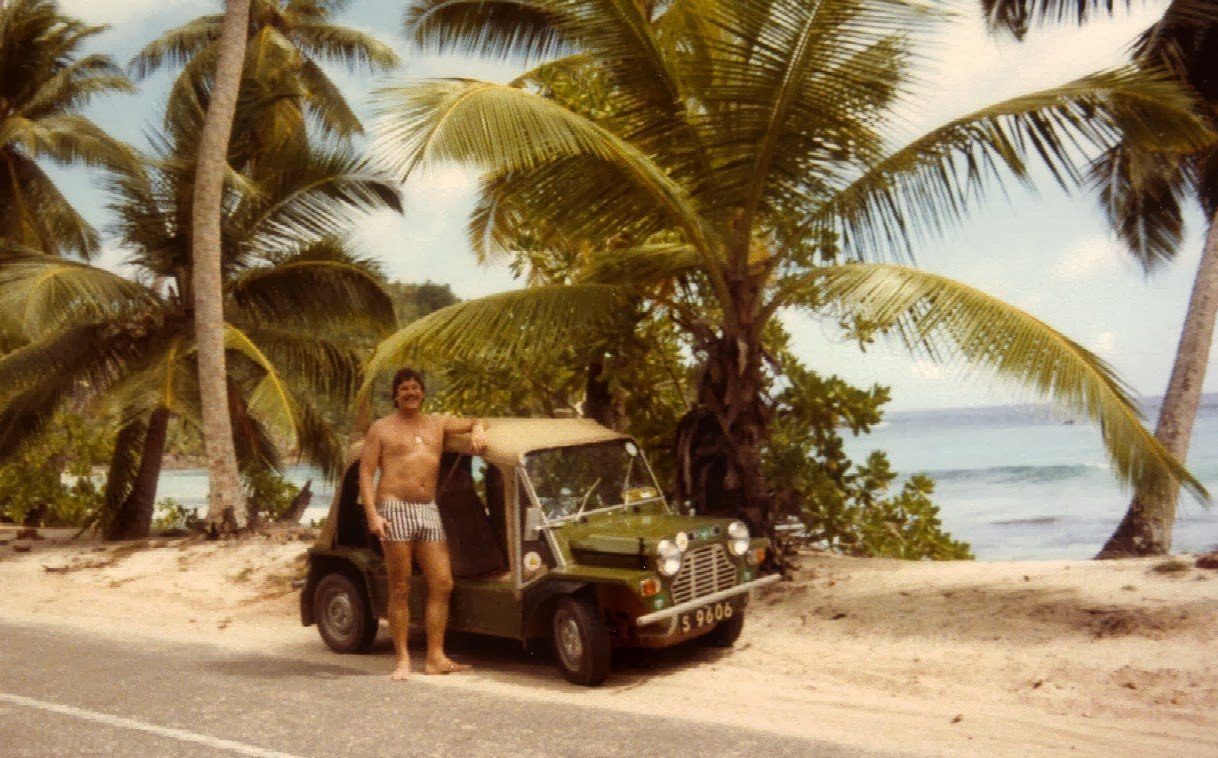
The photograph everyone came home with
Seychelles in the eighties, and the picture beside the Moke that came back in every holiday album. For one generation the islands looked exactly like this. No doors, no roof, wind in your face.
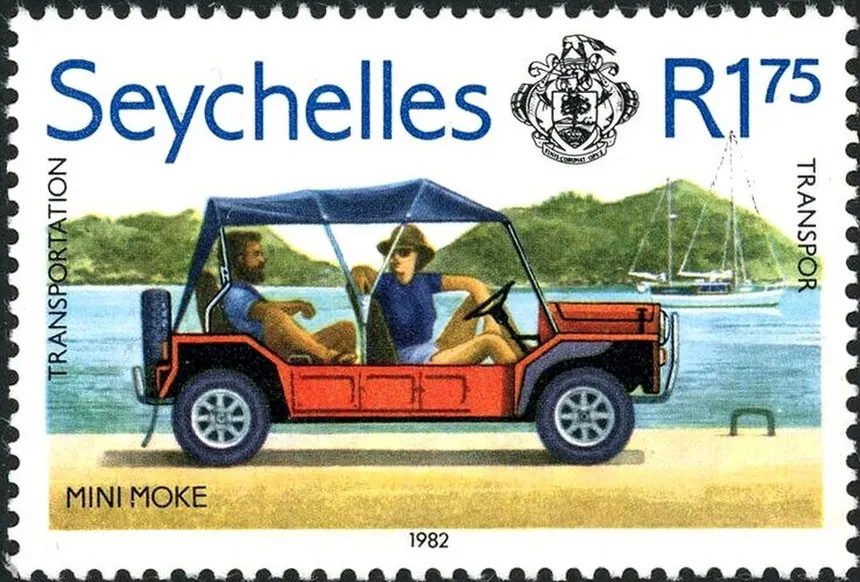
On a stamp, in 1982
The Mini Moke on the 1.75 rupee stamp of 1982, in the national transportation series. Very few hire cars end up as a national symbol. This one did.
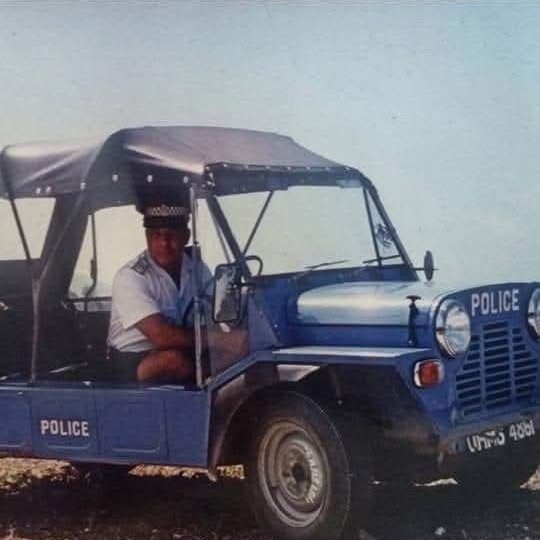
Also on duty
A Mini Moke in Seychelles police colours. The beach car, at work. Proof of how completely it had become the island's vehicle.
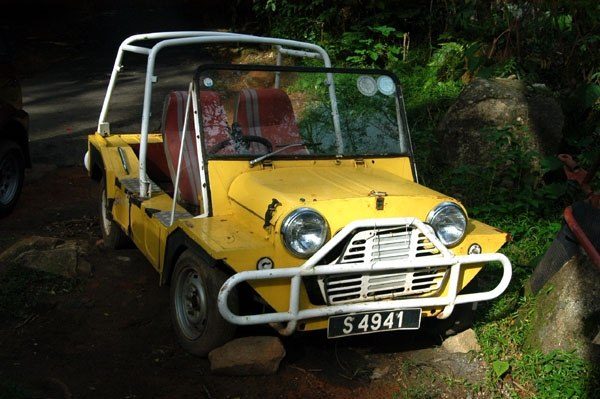
The lean years
Through the nineties the originals ran out of parts. Light bodies and salt air are a bad combination, and the classic Mokes very nearly disappeared from the roads.
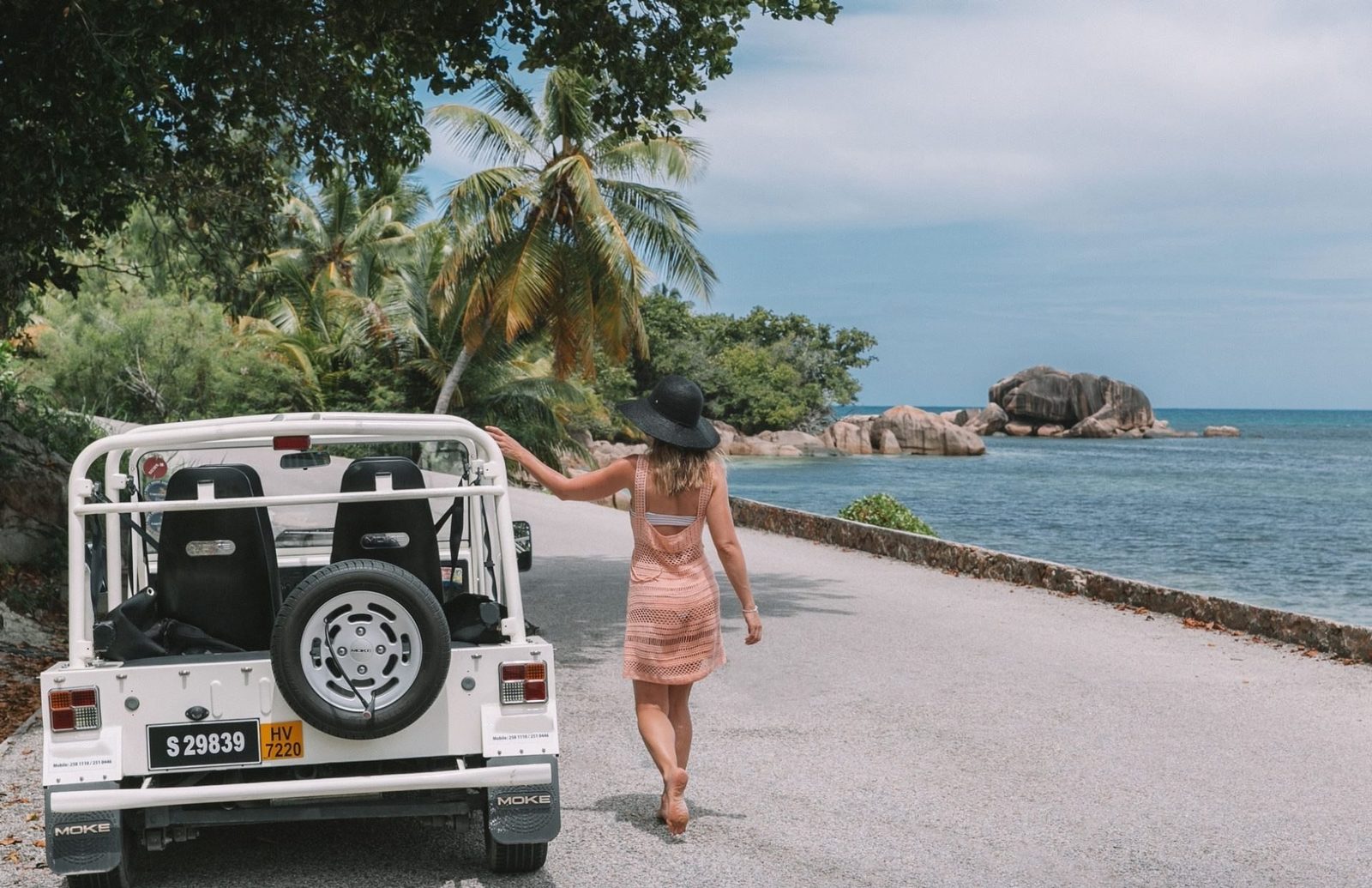
The return, on the coast road
The reborn Moke on a coast road. Since the middle of the last decade it has been back on the islands in a modern version. The same face and the same idea, with new mechanicals and none of the old faults.
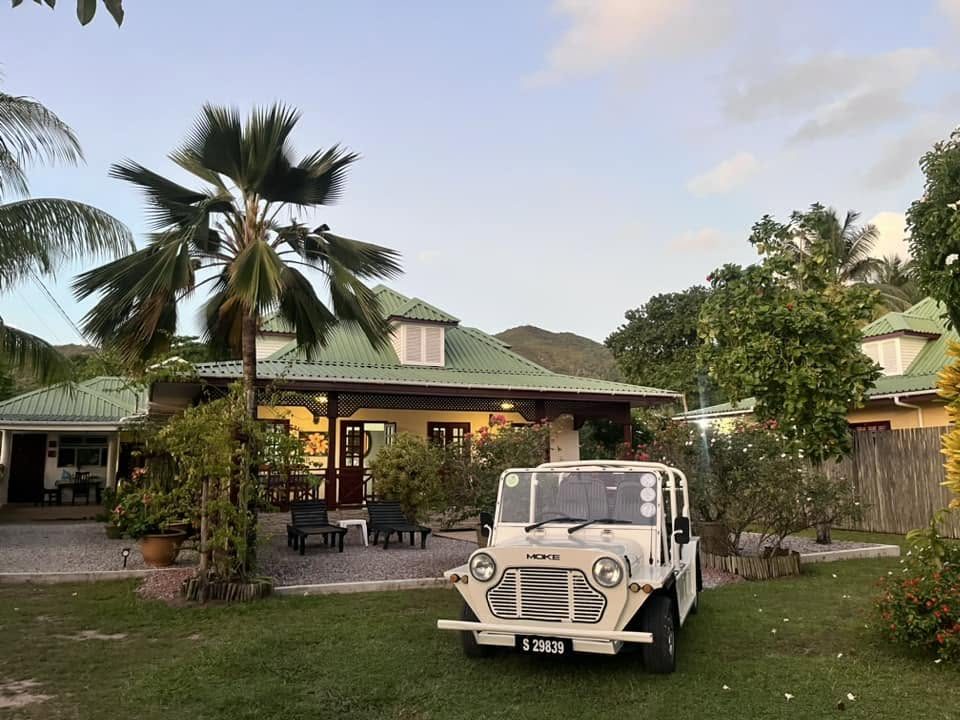
Waiting at the door
A modern Moke outside a guesthouse as the light turns. Road legal, reliable and ready to go. The myth, without the myth's breakdowns.
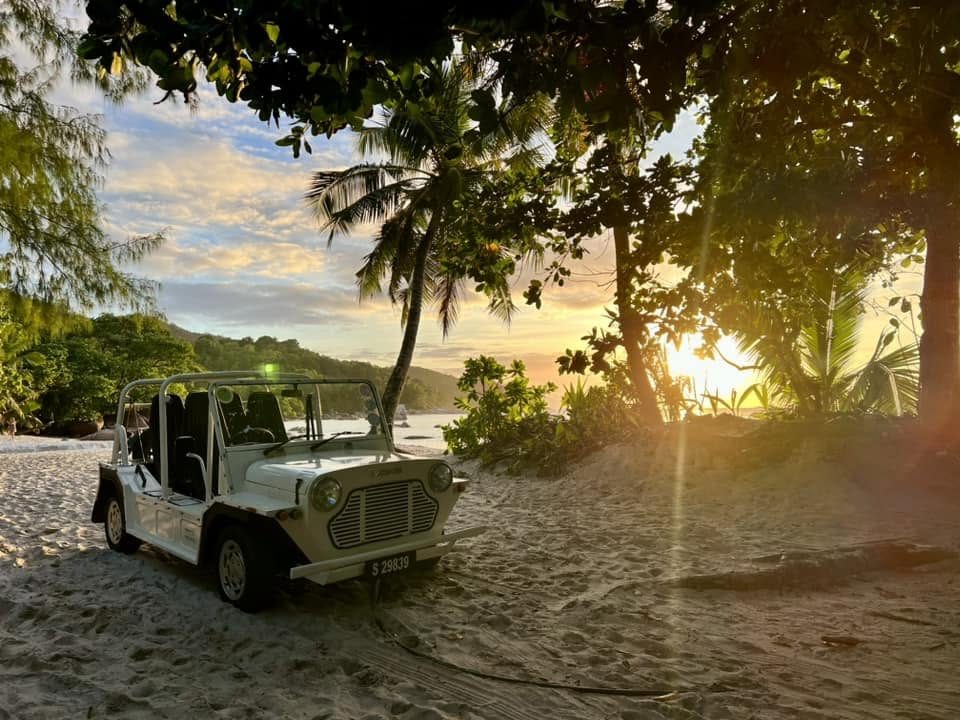
The one you rent today
A modern, road-legal Mini Moke at golden hour on a Seychelles beach. The same open-air drive as ever, now with lights that work, brakes from this century and the certainty that it will start in the morning.
A car the army did not want.
A car the army did not want. The Moke came from the same pen as the Mini. Alec Issigonis drew it and the British Motor Corporation built it from 1964, meant as a light vehicle the army could drop by parachute and carry almost anywhere. The army said no. The tiny wheels and the low clearance made it useless the moment the ground stopped being flat.
The name. Moke is an old English word for a donkey. A patient, undemanding working animal. That was the whole idea, a vehicle with nothing on it that simply does its job.
The second career. What failed as a military vehicle became the darling of hot places. The Caribbean, the Mediterranean and the tropics worked out that a car with no doors and no roof is exactly right when the weather is going to be fine anyway. In 1967 it drove through The Prisoner as the village taxi and the shape was fixed in everyone's head for good. It was built in Britain, then Australia, then Portugal, until production ended in the early nineties.
Why it belongs here. Hardly any car suits these islands better. The roads are slow and they bend constantly, the air is warm, the sea is rarely more than a few metres away. A closed car with the windows up separates you from all of it. The Moke does the opposite. It makes the island the interior.
The whole spec sheet.
It suits couples taking one perfect day rather than two weeks of transfers.
| From | €100 · ₹11,000 a day |
|---|---|
| One day only | €110 · ₹12,000 |
| Body | Convertible, no doors |
| Seats | 4 |
| Gearbox | Manual |
| Luggage | One beach bag |
| Fuel | Petrol |
| Air conditioning | No, the roof comes off instead |
| Available on | Mahé only |
| Deposit | None |
| Delivery | Included, airport, jetty, hotel or villa |
Insurance, unlimited kilometres and a second driver are inside the daily rate. There is no counter at the end of the week.
Asked every week.
Does the Moke have air conditioning?
No, and it never has. There is no roof and there are no doors, so the air is already all around you. If your week is in February and someone in the car will not forgive that, take the Fronx instead.
Is it manual?
Yes. It is the only manual car in this fleet and that is deliberate. If nobody in your group drives a manual gearbox, take the Jimny for the same open-air feeling with an automatic, and keep the Moke photograph for another trip.
Can we take it to Praslin or La Digue?
No. The Moke is a Mahé car. La Digue restricts private cars anyway, and the booking form will not offer you a Praslin handover for it.
What if it rains?
The canvas top goes up in about a minute and the sides stay open. A Seychelles shower usually lasts ten minutes. Most people simply pull over under a takamaka and wait it out, which is not the worst way to spend ten minutes.
How much luggage does it take?
One beach bag, honestly. It is not an airport car for a family of four with cases. Plenty of couples take a small car for the week and the Moke for one day.
Is it actually the old one?
No, and you would not want the old one. This is the modern re-issue, with the same silhouette, current mechanicals, lights that work and brakes from this century. The originals were fragile and the salt ate them.
What does a single day cost?
€110 · ₹12,000 for one calendar day, or €100 · ₹11,000 a day from two days. Most people take it for two.
If the Moke is not it.
Other cars
Ask Meera to hold the Moke.
Tell her which two days. It is the one car people ask for by name, so it goes early in the season.