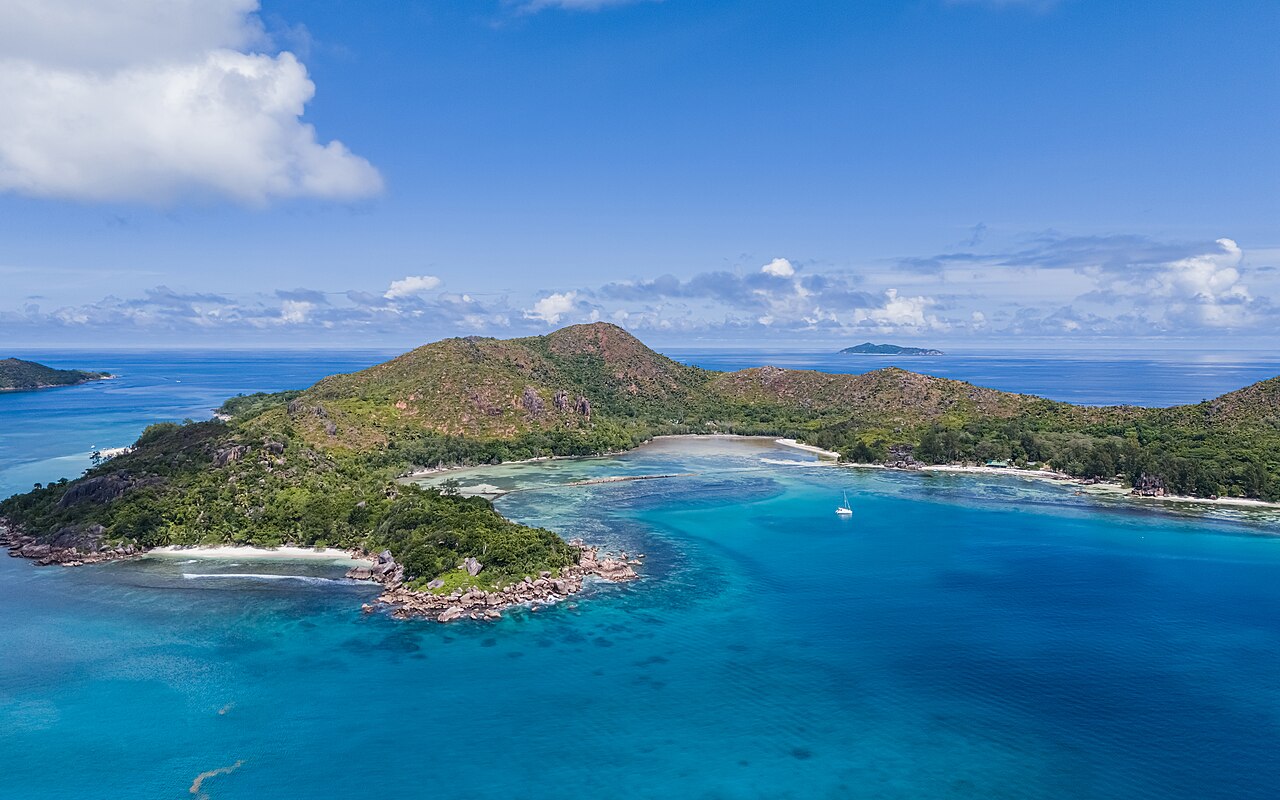
Giant tortoises and red earth
Curieuse
Island · Marine national park
Curieuse in short.
Curieuse sits off the north coast of Praslin and is the most rewarding day trip in the archipelago. Hundreds of Aldabra giant tortoises live here loose, it is one of only two islands where the coco de mer grows wild, and it has a mangrove boardwalk and a leper colony's ruins on the same three square kilometres.
Can you go?
Open. Boat trips run daily from Praslin, usually paired with St Pierre. There is a national park fee.
Curieuse, in 6 frames.
Every frame below was found in this island's own Commons category and its own title names the island. Captions are the file's title, so you can check the call.
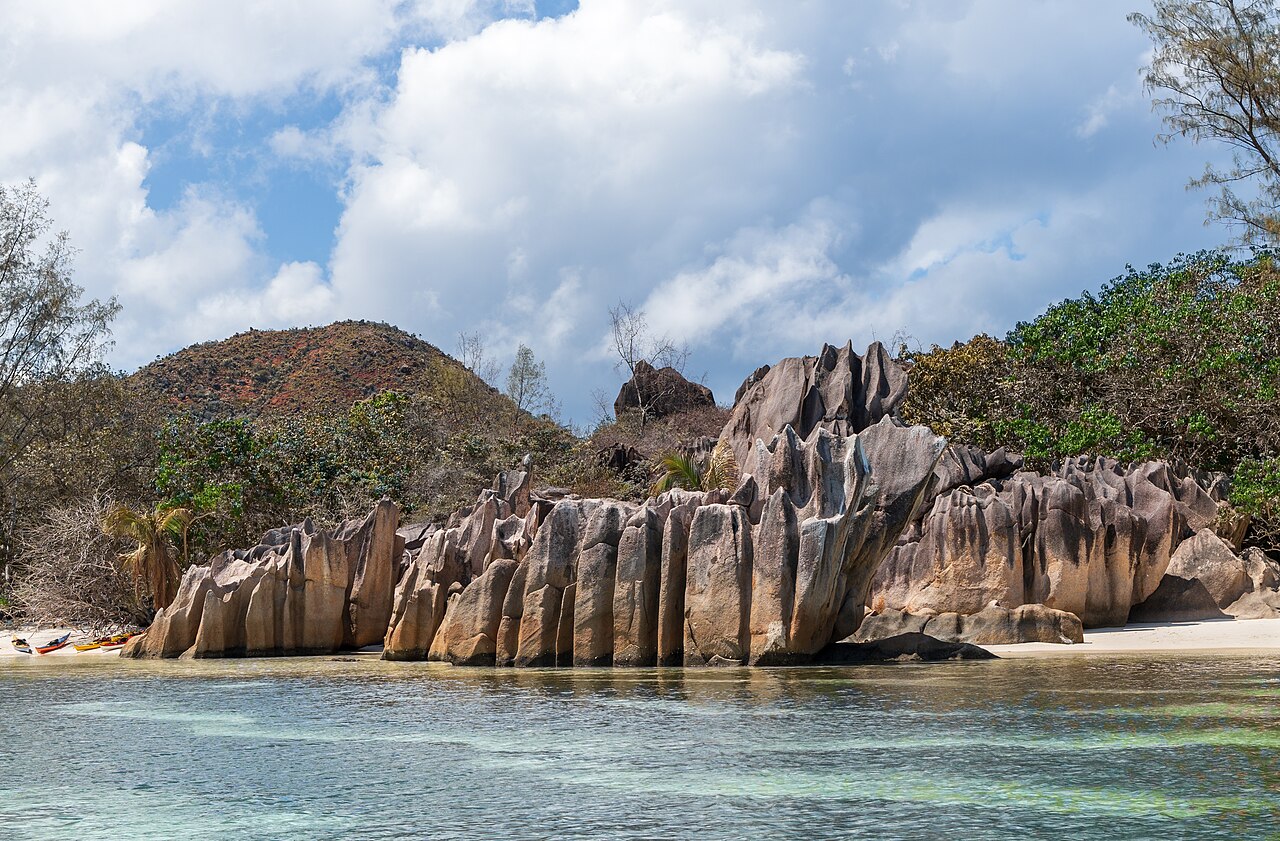
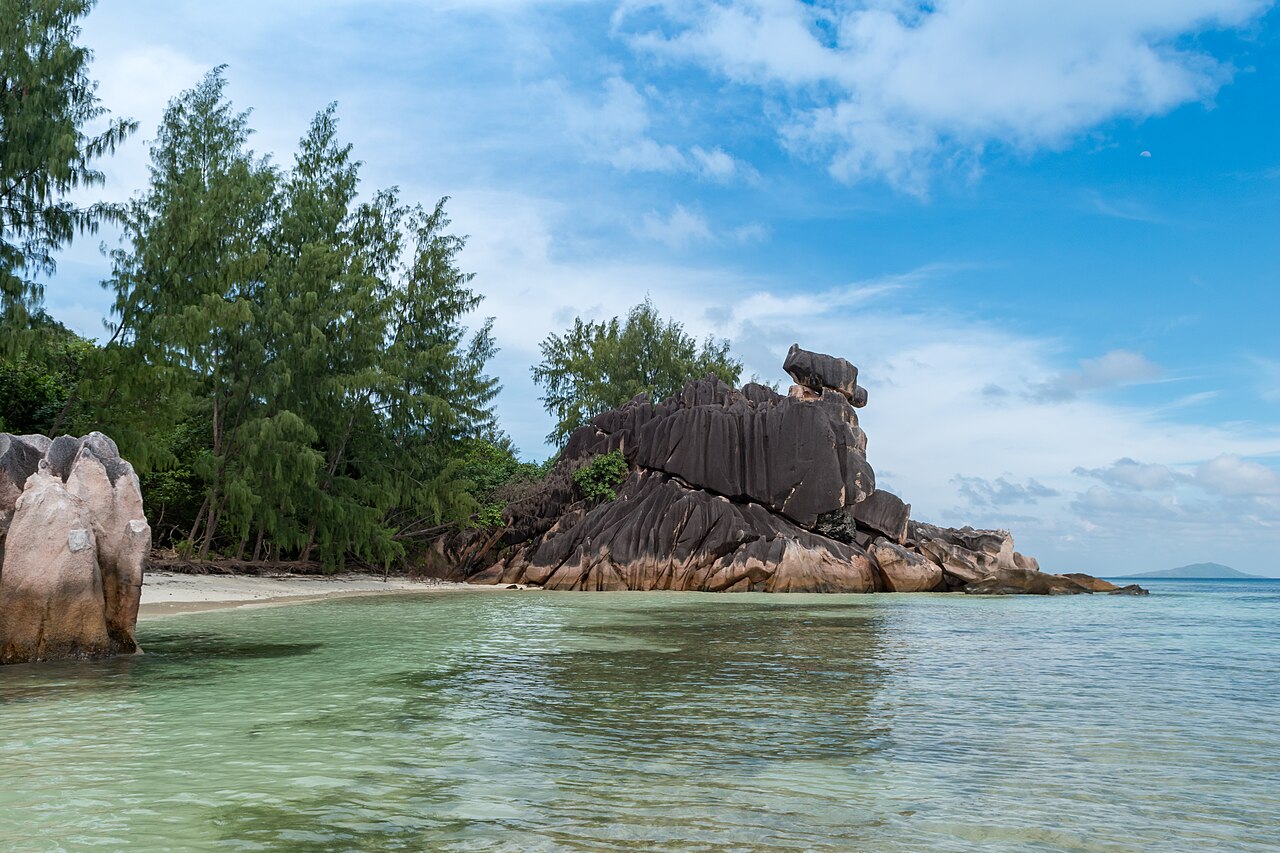
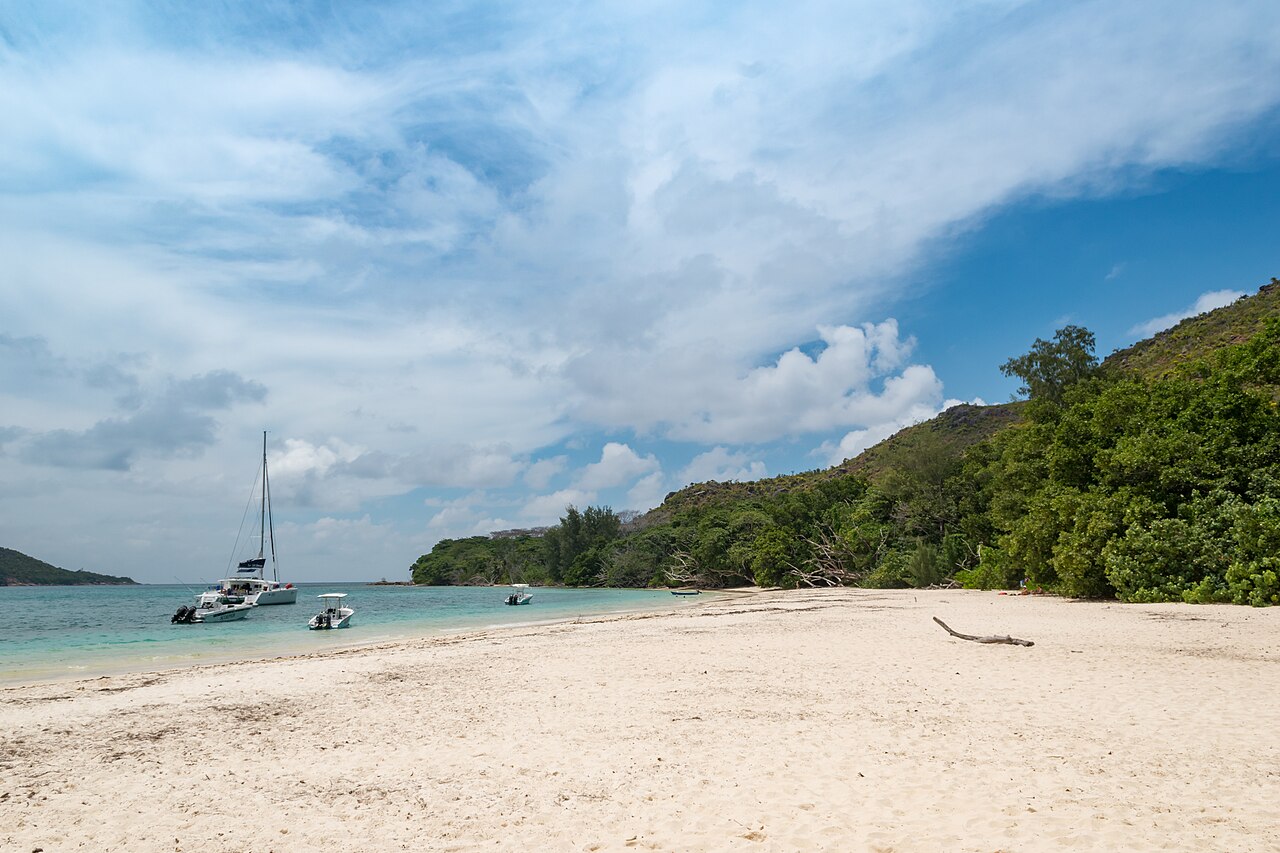
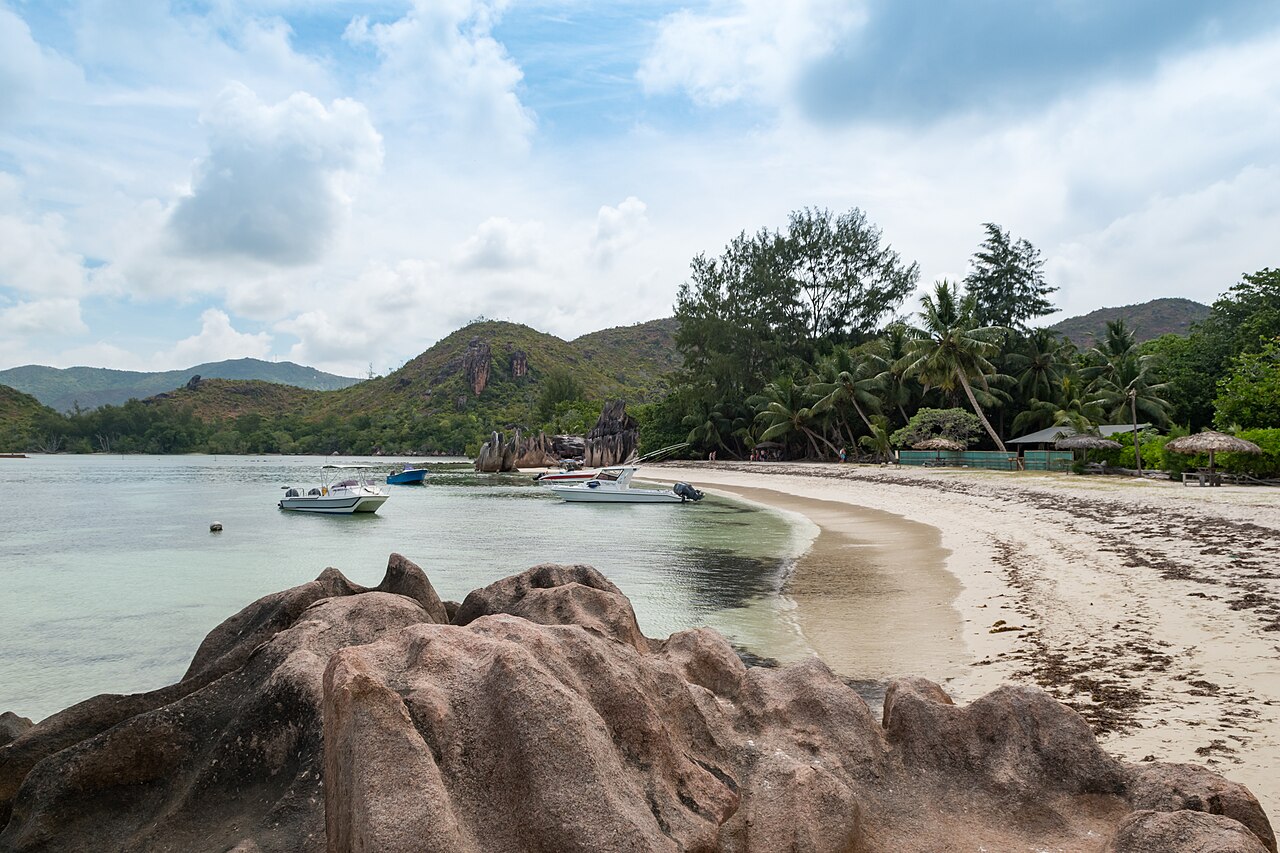
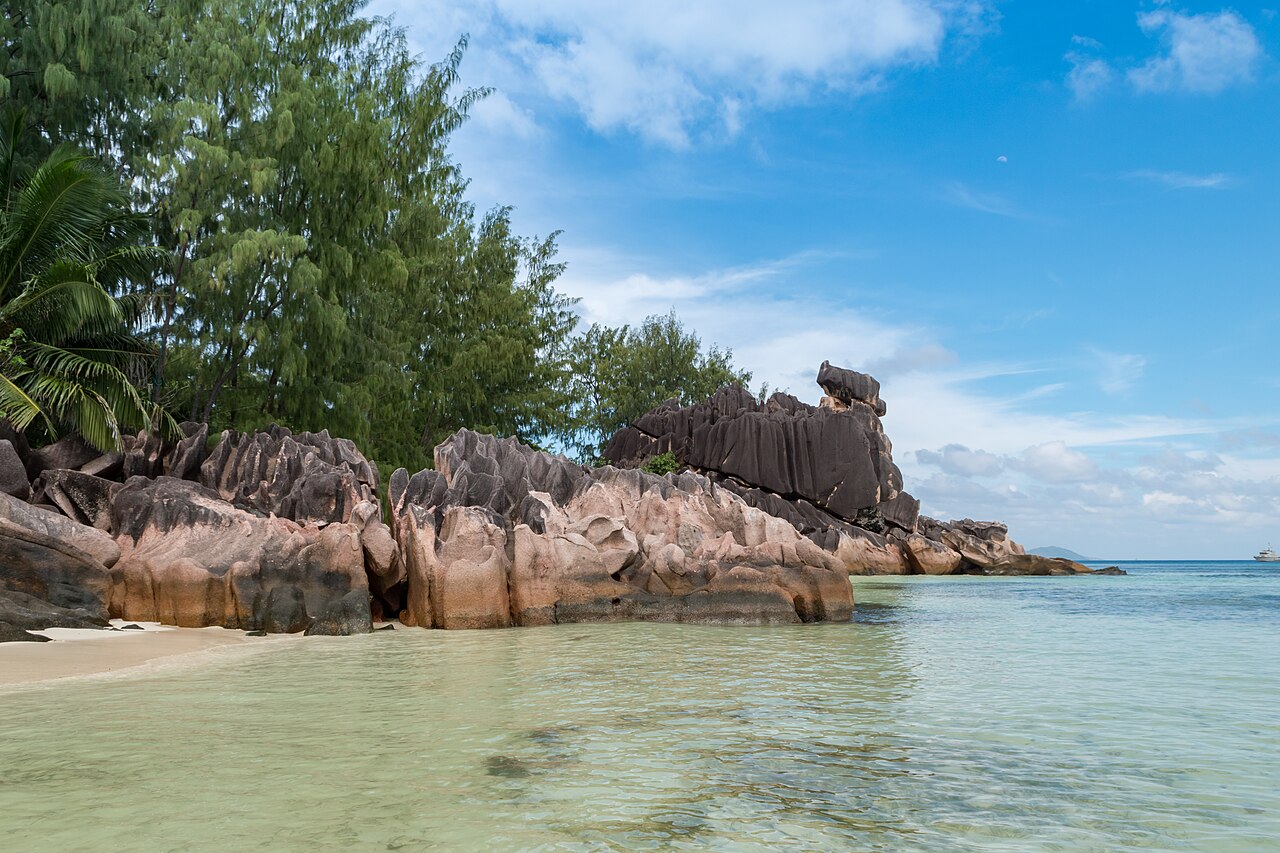
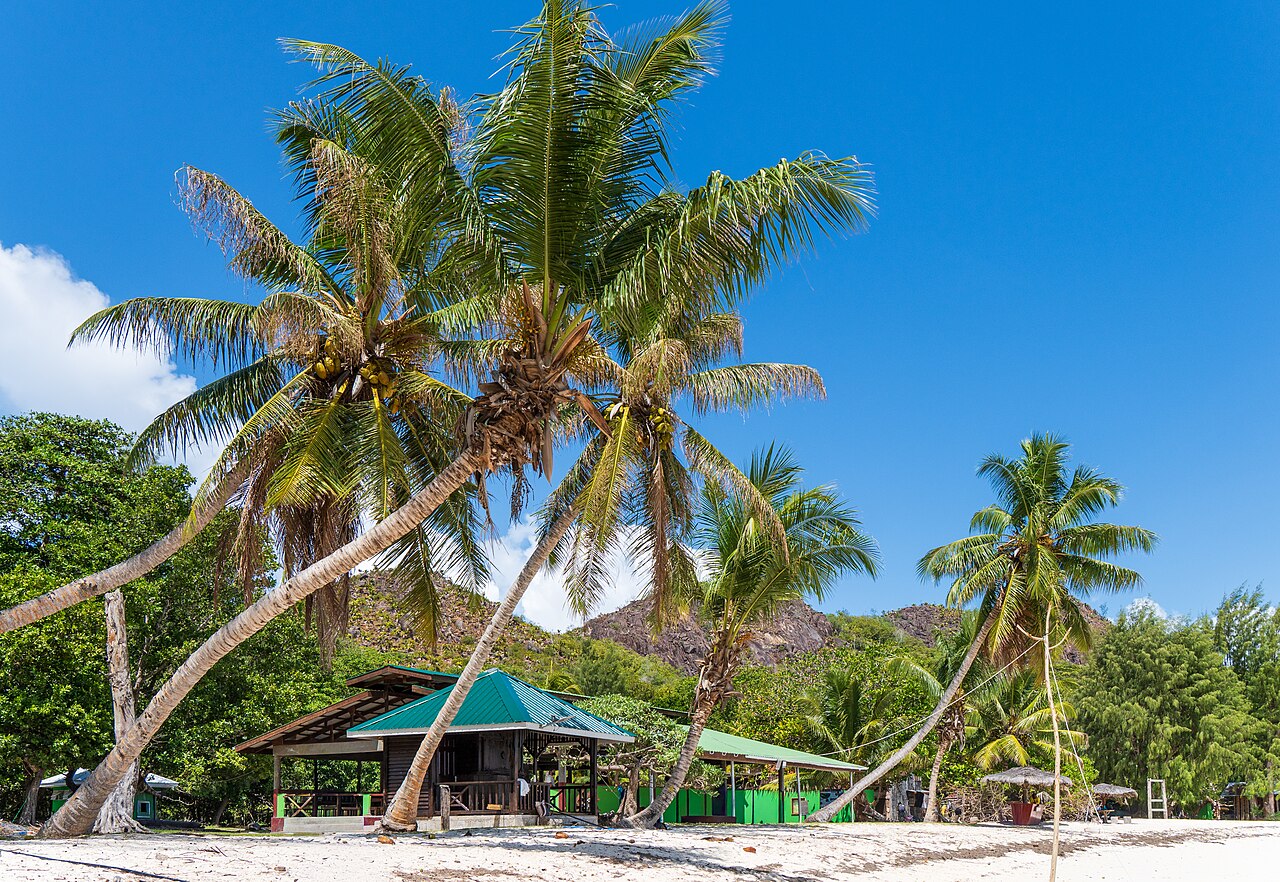
Photographs, under Creative Commons: A.Savin, FAL NorbertNagel, CC BY-SA 4.0 dronepicr, CC BY 2.0 dronepicr, CC BY 2.0 dronepicr, CC BY 2.0 dronepicr, CC BY 2.0 NorbertNagel, CC BY-SA 4.0
The tortoises
Aldabra giant tortoises were brought here between 1978 and 1982 and the population has been breeding ever since. They are not in a pen. You walk the path from Baie Laraie to Anse St José and they are on it, beside it, and occasionally in the way of it, and nobody hurries them.
The island's native tortoises were wiped out in the plantation era, which is what makes the current population a restoration rather than a zoo.
Red earth, coco de mer and mangroves
Curieuse was originally called Île Rouge for the colour of its soil, which is a startling brick red under the palms. The coco de mer grows wild here and on Praslin and nowhere else on earth.
A wooden boardwalk crosses a mangrove swamp between the two bays, which is a rare habitat in Seychelles and cooler than the open path.
The leper colony and the Doctor's House
Curieuse was a leper colony from 1829 until 1965. The ruins are still there, and the physician's house at Anse St José has been restored as a small museum and education centre. It is a layer of human history the granite islands mostly do not have, and it is worth the twenty minutes.
How you arrive
Boat trips leave from Baie Sainte-Anne on Praslin, most commonly as a full day with St Pierre for snorkelling and a barbecue on the beach. The national park fee is usually collected on the island.
The sheet.
Checked 2 September 2026 against the sources named in our island file.
- Area
- 2.9 km²
- Leper colony
- 1829 to 1965
- Marine national park
- declared 1979
- Aldabra giant tortoises
- brought here between 1978 and 1982
What people ask.
Can we visit Curieuse?
Open. Boat trips run daily from Praslin, usually paired with St Pierre. There is a national park fee.
How do you get to Curieuse?
Boat trips leave from Baie Sainte-Anne on Praslin, most commonly as a full day with St Pierre for snorkelling and a barbecue on the beach. The national park fee is usually collected on the island.
What we do arrange.
We do not sell islands, and most of these could not be sold to anybody. What we do arrange is everything that gets you to them and around them once you land.

Car hire, from €45 a day
Ten cars, no deposit, handed over at the airport, the jetty or your hotel.
Days out and excursions
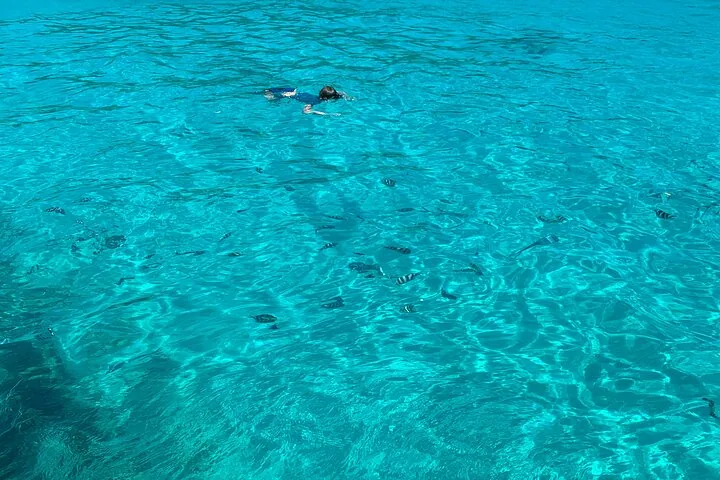
Island tours, boat days, snorkelling and walks, with real ratings and free cancellation to twenty-four hours.
Airport transfers
A driver who watches your flight number and waits with your name on a board.
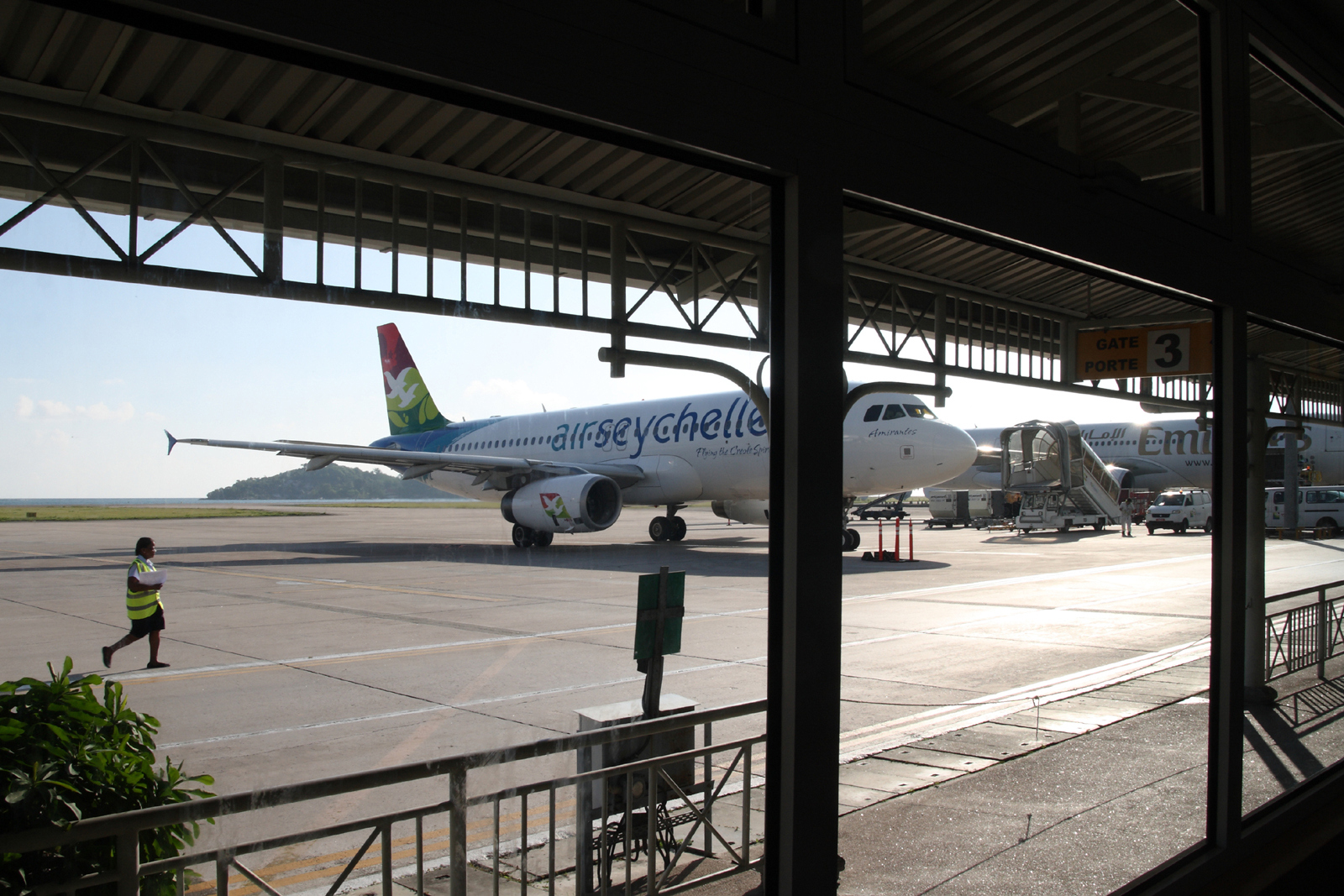
The terminal photograph above: Remi Jouan, CC BY-SA 3.0
Planning around this island?
Tell us the dates and what you want the trip to feel like, and Meera will write back with what is actually possible.