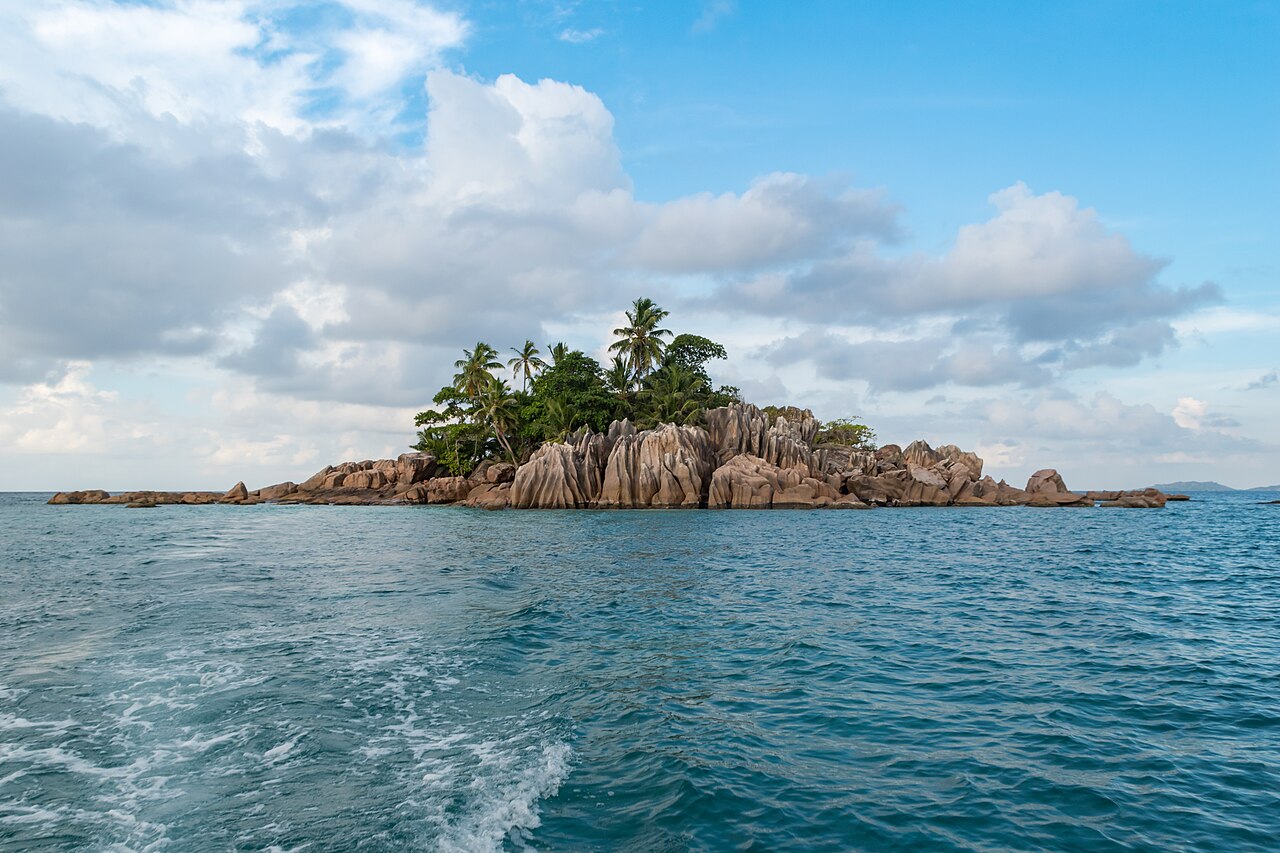
Granite underwater, which is rarer than coral
Snorkelling and diving
The reefs here are not the postcard coral gardens of the atolls. They are granite boulders under water, and the fish life around them is the reason to get in.
These are not coral gardens. They are boulders, and the fish know it.
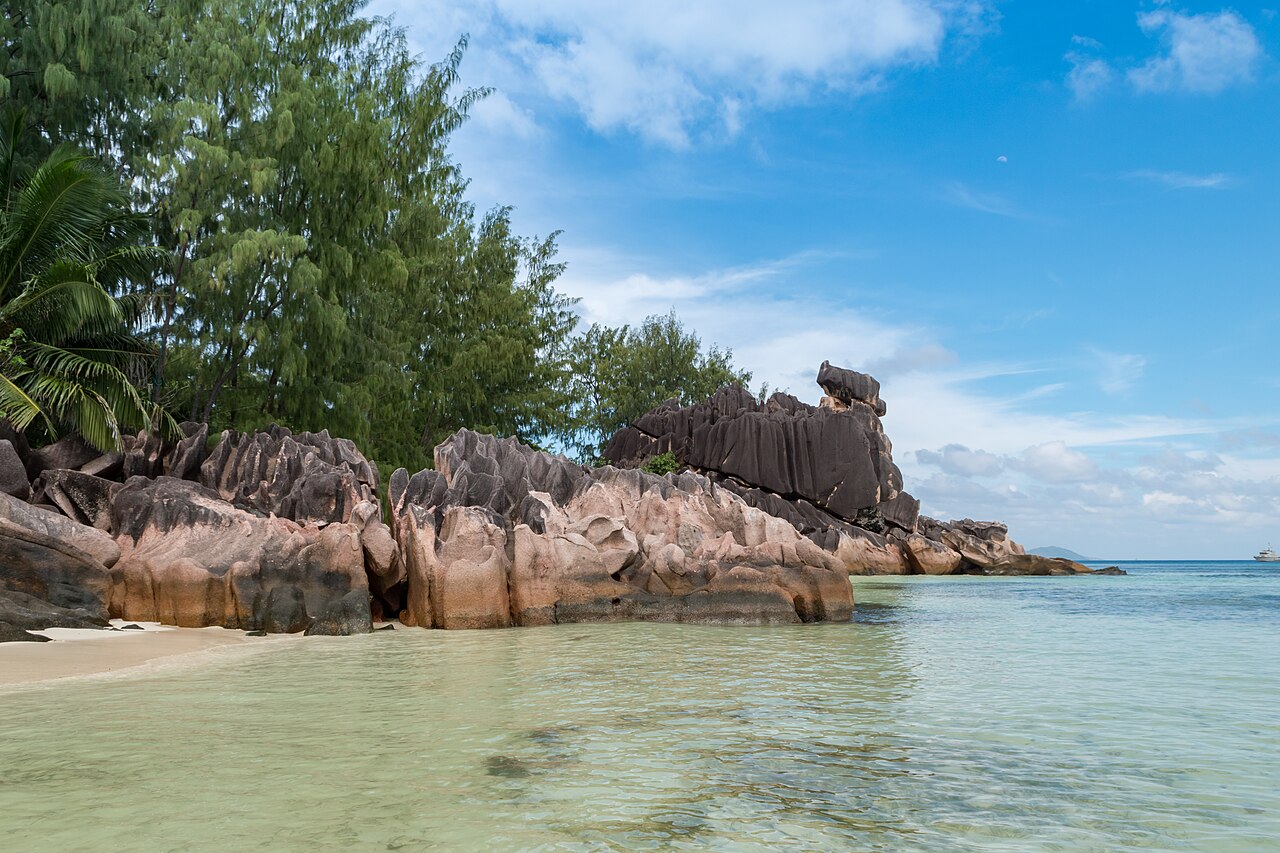
If you have snorkelled in the Maldives or the Andamans you will arrive here expecting a coral shelf, and on most of the inner islands you will not find one. What you will find is granite: enormous rounded boulders running down into the water and out of sight, with everything that lives around structure living around them.
That is a different kind of snorkelling and, for a lot of people, a better one. It also means the sites that matter here are the marine parks and the granite islets, rather than the beach outside your hotel.
Saint Pierre, the one everybody photographs
A single granite islet off the north-east of Praslin with palms growing out of the top of it, in clear water and shallow enough to snorkel all the way round. It is the best-known snorkelling stop in the country and it deserves it.
It is a boat stop rather than a swim from shore, and it is usually combined with Curieuse on the same day out of Anse Volbert. Go early: by mid-morning several boats are on it at once.
The Sainte Anne marine park, off Victoria
Six islands in a national marine park twenty minutes off Mahé, and the easiest serious snorkelling to reach from the main island. Shallow, sheltered, and set up for it, with glass-bottomed boats for anybody who does not want to get in.
It is the right first day of a trip: it is close, it is calm, and it introduces the fish life before you commit a whole day to a longer crossing.
The days out
Island tours, boat days, snorkelling and walks, with real ratings, real review counts and free cancellation up to twenty-four hours before.
See the toursPort Launay and Baie Ternay, on the west of Mahé
A marine park on Mahé's west coast that you can walk into from the beach. Shallow, protected, and one of the very few places in the country where good snorkelling does not require a boat.
It is calm through the trade-wind months, which makes it the reliable snorkelling answer from May to September when the southern coasts are unusable.
Curieuse, Cousine and Aride
The nature-reserve islands north of Praslin, all of them boat trips, all of them worth it. Curieuse is the tortoise island and the snorkelling off it is good. Cousine and Aride are managed reserves with limited landings and some of the healthiest water in the inner islands.
Aride in particular has restricted access and does not land in every sea state. That is a feature rather than an inconvenience, and it is why the reef there is in the condition it is.
What the bleaching did, honestly
The 1997 and 2016 bleaching events hit shallow coral across the Indian Ocean and Seychelles was not spared. Some of the shallow coral around the inner islands died and some of it has come back, unevenly, and anybody who tells you it is exactly as it was is selling you a boat trip.
What did not change is the granite, the topography and the fish. The reason to snorkel here is not the coral and never really was.
Diving, and what it adds
There are dive centres on all three main islands and the sites are granite drop-offs, swim-throughs and pinnacles rather than walls of coral. Shark Bank off Mahé is the best known. Whale sharks pass through, most often between about September and November.
The water is warm enough all year that nobody wears a wetsuit for warmth. What decides the diving is visibility, and visibility follows the wind.
When to get in
April and October, for the same reason as everything else on this site: no prevailing wind, no swell on any coast, and the clearest water of the year. Those two months are genuinely better underwater than the rest and the difference is obvious.
Outside them, snorkel on whichever coast is calm in your month. The windward side in any season has stirred-up sand and poor visibility even on a sunny day, which is the commonest reason people come out of the water disappointed.
Snorkelling and diving, in six frames.
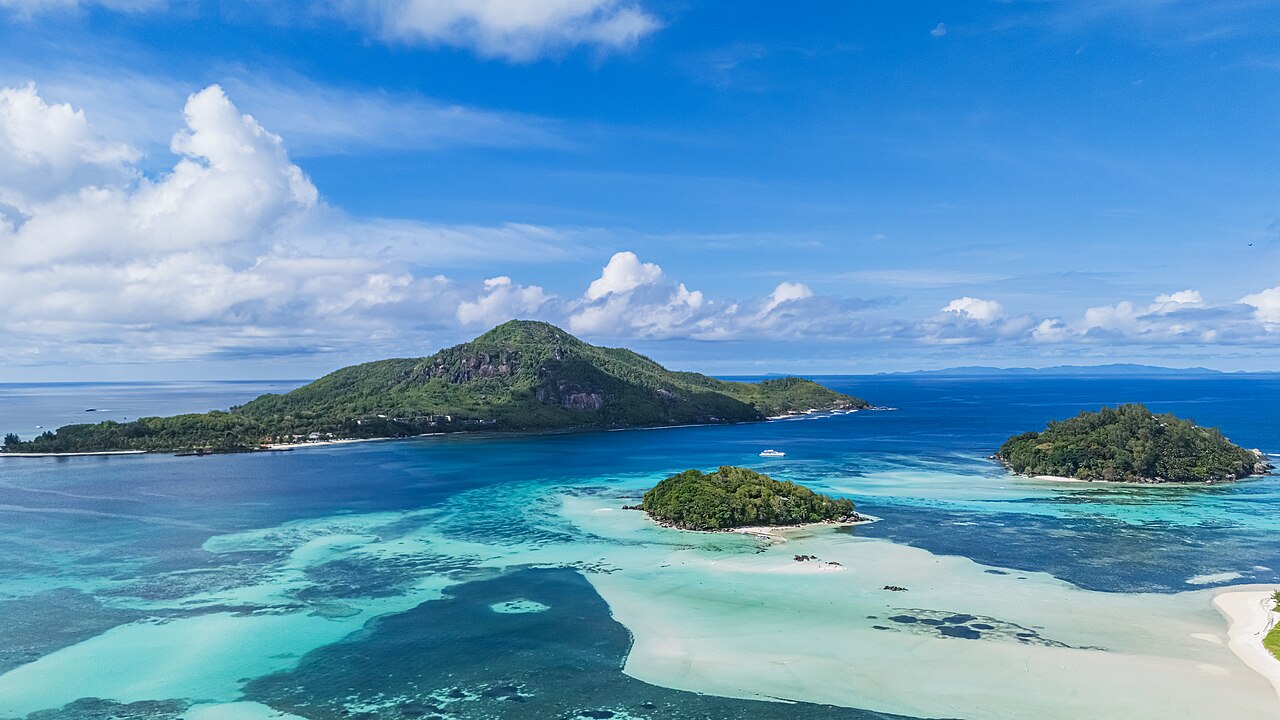

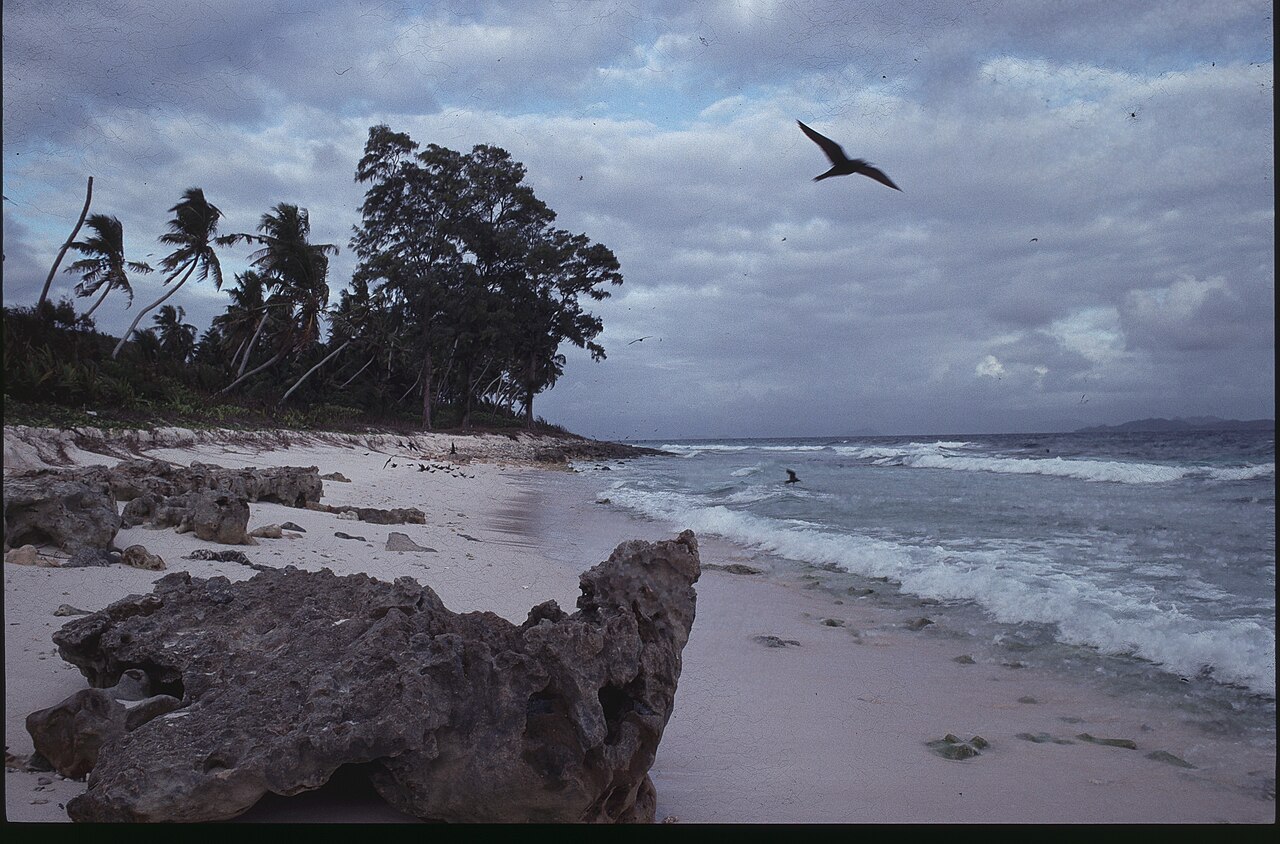
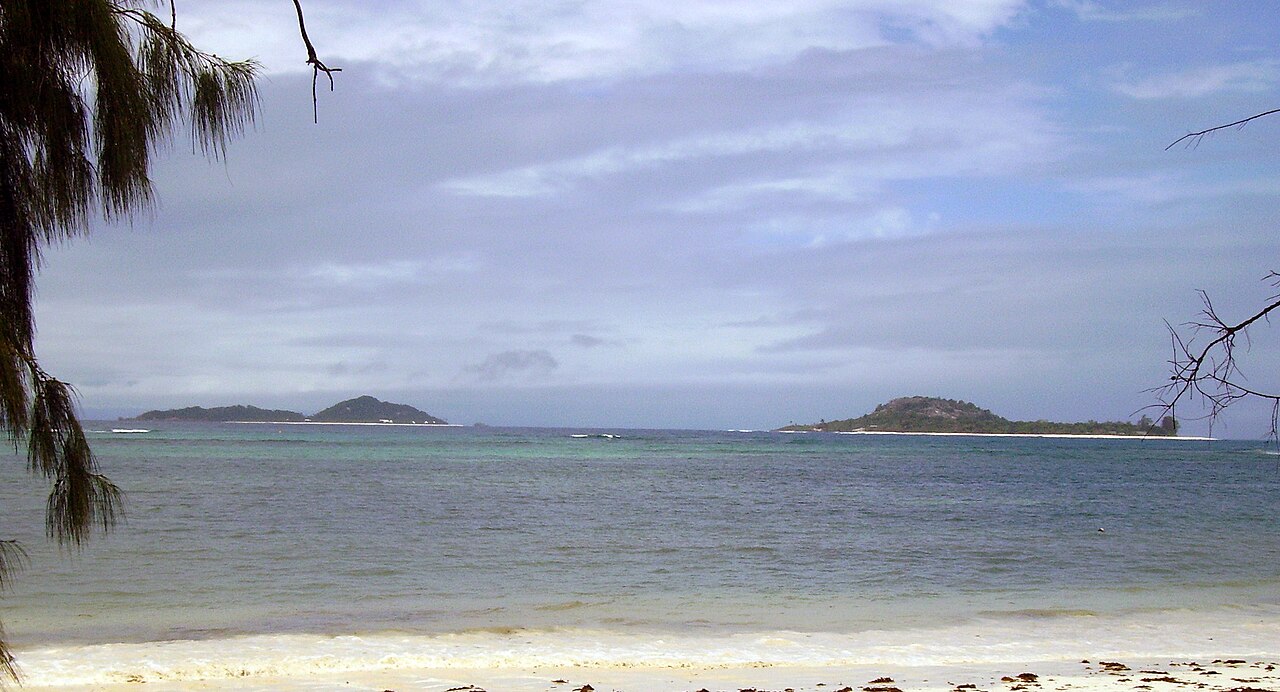
Photographs, under Creative Commons: A.Savin, FAL Hansueli Krapf, CC BY-SA 3.0 Colin J Taylor, CC BY-SA 3.0 WL, CC BY-SA 3.0 dronepicr, CC BY 2.0 A.Savin, FAL
What people ask.
Where is the best snorkelling in Seychelles?
Saint Pierre islet off Praslin, the Sainte Anne marine park off Victoria, and Port Launay and Baie Ternay on the west coast of Mahé. Port Launay is the only one of the three you can walk into from the beach.
Is there coral in Seychelles?
Some, and less than there was. The 1997 and 2016 bleaching events killed shallow coral across the Indian Ocean and recovery here has been uneven. The snorkelling is worth doing for the granite topography and the fish rather than for coral gardens.
When is the visibility best?
April and October, when there is no prevailing wind and no swell on any coast. Outside those months, snorkel on whichever coast is calm, because the windward side has stirred-up sand even on a sunny day.
Can you snorkel from the beach?
At Port Launay and Baie Ternay on Mahé, yes. Most of the good sites are boat stops, usually combined into a day out of Anse Volbert on Praslin or Victoria on Mahé.
Do you need a wetsuit?
Not for warmth. The water is in the high twenties all year and divers here wear a shorty for abrasion rather than for temperature.
Are there whale sharks?
They pass through, most often between about September and November. They are not guaranteed and any operator promising them is guessing.
The good water is a boat ride away
Tell us which island you are on and Meera will send the day out that reaches the marine park, with the rating, the review count and the cancellation terms attached.